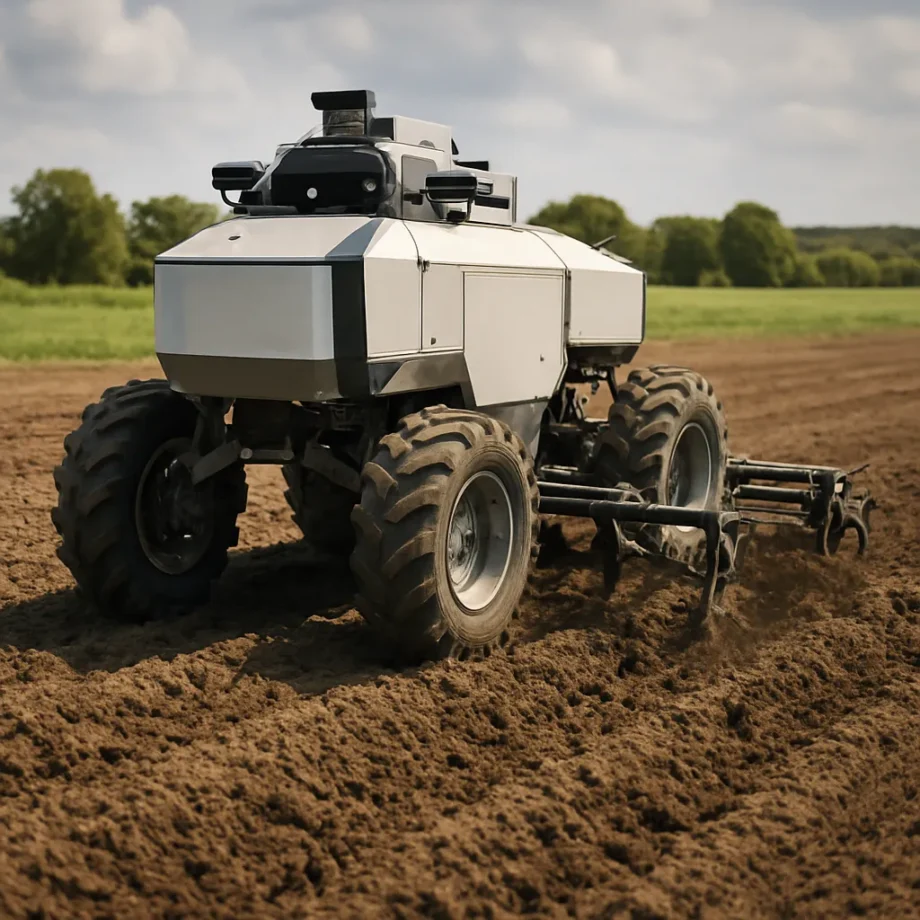
The intersection of cutting-edge technology and traditional farming is redefining the way we cultivate our fields. How Smart Machines Will Adapt to Soil Conditions Automatically explores the latest advances in agricultural machinery and examines how they can **revolutionize** productivity, **sustainability**, and resource management. From intelligent sensors that analyze soil health in real time to fully **autonomous** vehicles that navigate uneven terrain, the agricultural landscape is undergoing a dramatic transformation. This article delves into several key topics—precision agriculture, robotics, soil sensing, and future prospects—highlighting the role of emerging innovations in shaping modern farming.
Precision Farming Technologies
Precision agriculture has become the cornerstone of modern crop production, leveraging **data analytics** and **connectivity** to optimize every stage of plant growth. Farms worldwide are adopting tools that enable variable-rate seeding, fertilization, and irrigation, thereby reducing waste and improving yields.
GPS-Guided Machinery
- Tractors equipped with satellite navigation systems can maintain sub-inch accuracy when planting seeds, ensuring uniform crop spacing.
- Yield monitors record harvest data in real time, enabling farmers to adapt their strategies based on field performance.
- Auto-steering combines GPS signals with onboard computers, reducing operator fatigue and minimizing soil compaction by following precise tire tracks.
Variable-Rate Application
Variable-rate technology (VRT) adjusts the amount of inputs—such as water, fertilizer, and pesticides—applied to specific zones within a field. By combining soil maps, **sensor** measurements, and historical yield data, VRT systems:
- Reduce over-application of chemicals in nutrient-rich areas.
- Target underperforming zones with additional resources.
- Lower operational costs and minimize environmental impact.
Autonomous Vehicles and Robotics
Advances in **robotics** and machine learning are propelling the development of driverless tractors, harvesters, and specialized drones. These machines perform repetitive tasks with unerring precision, freeing human labor for more complex decision-making roles.
Driverless Tractors
- Equipped with LiDAR, radar, and computer vision, autonomous tractors can detect obstacles and navigate uneven terrain safely.
- Fleet-management software coordinates multiple units to perform synchronized operations, maximizing field coverage.
- Remote monitoring allows farmers to oversee activities via smartphone or desktop applications.
Harvesting Robots
Harvesting remains one of the most labor-intensive phases of crop production. Robotic pickers utilize advanced gripping mechanisms and vision algorithms to identify ripe fruits and vegetables without causing damage:
- Machine learning models classify fruit ripeness based on color, size, and texture.
- Soft robotic arms gently handle delicate produce, reducing bruising and spoilage.
- Continuous operation enhances **efficiency** during peak harvest periods.
Soil Sensing and Adaptation
At the heart of adaptive agricultural machinery lies the capacity to sense soil conditions and respond dynamically. By integrating **smart** sensors, machines can adjust their operations to varying moisture levels, compaction, and nutrient content.
Real-Time Moisture Monitoring
- Soil moisture sensors embedded in plows and planters relay data every few seconds, allowing immediate adjustments to planting depth and seed spacing.
- Automated irrigation systems interpret sensor readings to deliver water precisely where and when it’s needed, conserving resources.
- Wireless sensor networks transmit field-wide moisture maps to the operator’s control panel, facilitating informed decision-making.
Soil Composition Analysis
Innovative sensors measure pH, organic matter content, and nutrient levels on the go. Key benefits include:
- Mapping fertility gradients to guide **adaptation** of fertilizer formulas.
- Identifying compacted zones requiring specialized tillage implements.
- Detecting soil-borne pathogens early to prevent disease outbreaks.
Future Prospects and Challenges
As agricultural machinery evolves, several emerging trends and obstacles will shape the next decade of farming.
Integration of Artificial Intelligence
The integration of AI promises machines that not only perform tasks but also learn from field conditions and past results:
- Predictive algorithms forecast pest and disease outbreaks, enabling preventative measures.
- Self-optimizing systems fine-tune machine parameters for maximum **productivity**.
- Digital twins simulate field operations, reducing the risk of costly errors.
Energy and Environmental Concerns
To achieve global sustainability goals, farmers and manufacturers must address the **energy** footprint of high-tech machinery:
- Electric and hydrogen-powered tractors are in development to replace diesel engines and cut emissions.
- Life-cycle assessments ensure that new components—such as batteries and sensors—are recyclable.
- Carbon-credit programs incentivize adoption of low-impact technologies.
Adoption Barriers
Despite clear advantages, widespread implementation faces practical challenges:
- High upfront investment costs deter smallholders and family farms.
- Data security and privacy concerns arise when sharing operational details with third-party providers.
- Technical training and workforce development are essential for managing sophisticated systems.
Innovation in agricultural machinery continues to accelerate, driven by the need for **sustainability**, resource efficiency, and stable food supplies. By automatically adapting to soil conditions and leveraging the power of **autonomy**, the next generation of farm equipment is poised to deliver unprecedented levels of performance and resilience.