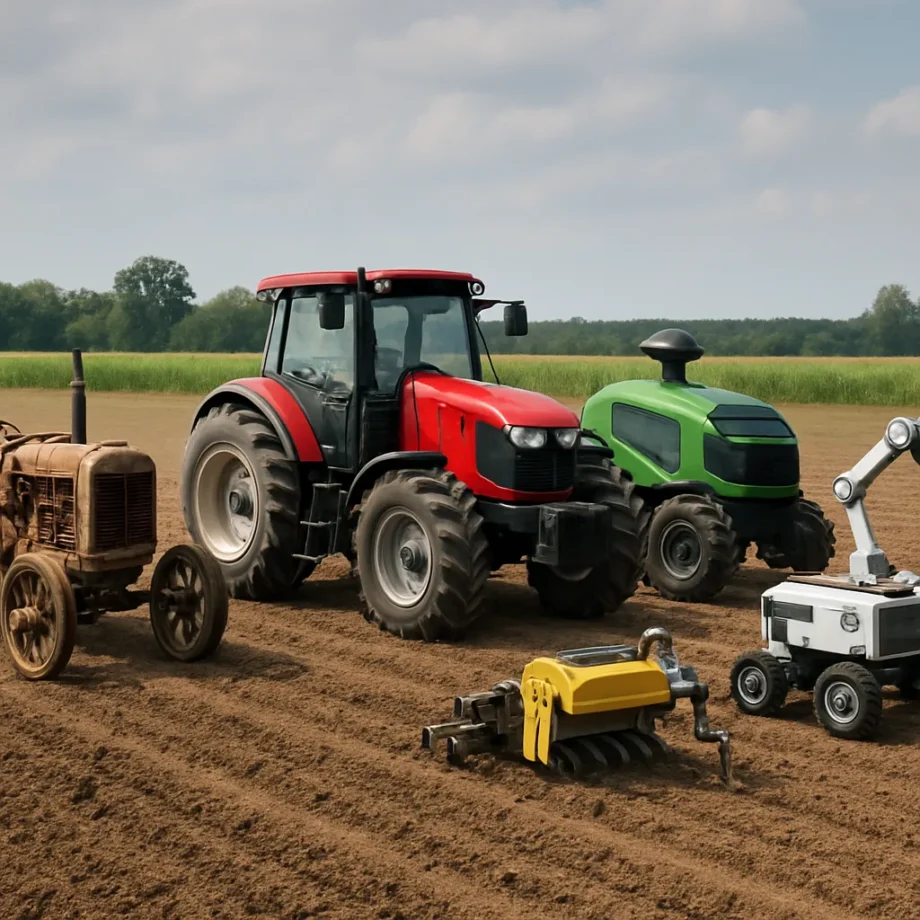
Agricultural machinery has witnessed a remarkable journey from simple plows to advanced self-repairing harvesters that combine cutting-edge technology with robust field performance. This article explores the historical milestones, emerging diagnostic systems, and the promising future of equipment capable of detecting and mending its own faults, reshaping how farmers approach maintenance and productivity.
Early Mechanization and the Birth of Farm Equipment
The transformation from hand-held tools to steam-powered engines marked the first major leap in agricultural productivity. Farmers traded hoes and scythes for tractors, threshers, and combines that could cover acres in a fraction of the time. These machines offered unprecedented efficiency, but they also introduced new challenges. Regular wear and tear, unpredictable failures, and long downtimes became part of daily farm life. Despite these drawbacks, early mechanization laid the groundwork for continuous innovation in design and function.
By the early 20th century, manufacturers began adding simple gauges and mechanical indicators to alert operators about oil levels, belt tensions, and temperature fluctuations. While these rudimentary systems improved reliability, farmers still relied heavily on manual inspections and often lacked the technical expertise to diagnose deeper issues. The seeds of automated monitoring were sown, however, setting the stage for a future where machines would not only report problems but actively address them.
Integrating Diagnostics and Autonomy
Technological advances in electronics and computing during the late 20th century enabled the integration of sophisticated sensors and control units into tractors, sprayers, and other farm implements. Embedded microprocessors could continuously measure engine performance, hydraulic pressure, and fuel consumption, providing real-time feedback to the operator. This shift toward intelligent machinery represented a significant step toward autonomy and preventative maintenance.
Sensor Technologies and Data Analytics
Modern agricultural machines deploy an array of sensors—temperature probes, vibration detectors, and infrared cameras—to monitor critical components. Collected data travels to onboard computers that run predictive algorithms, identifying patterns linked to potential malfunctions. For example, a subtle increase in vibration amplitude may indicate bearing wear, while slight temperature spikes can signal lubrication problems. By harnessing diagnostics and machine learning, these systems can recommend service intervals or adjust operating parameters to prolong component lifespan.
Autonomous Operation and Remote Alerts
The advent of GPS guidance systems and robotic platforms has opened new horizons for autonomy in agriculture. Driverless tractors can follow pre-programmed paths, adjusting speed and steering in response to field conditions. When integrated with cloud-based monitoring, machines can send instant alerts to farm managers or technicians via mobile apps or SMS. Such connectivity ensures that critical issues are addressed promptly, reducing downtime and preventing cascading failures.
The Rise of Self-Repairing Systems
While diagnostic capabilities help predict failures, the next frontier is machinery that can actively repair itself. Inspired by biological systems, engineers are developing components made from materials with resilience and self-healing properties. Imagine hydraulic hoses that seal minor punctures or metal surfaces that autonomously fill cracks under heat activation, restoring structural integrity without human intervention.
Materials with Self-Healing Properties
Recent breakthroughs in polymer science have led to elastomers embedded with microcapsules containing healing agents. When a crack forms, microcapsules rupture, releasing the agent to fuse the gap. Similar approaches use reversible chemical bonds that reform under specific temperatures or pressures. Incorporating these materials into gaskets, seals, and flexible joints can significantly reduce fluid leaks and part replacements.
Modular Design and On-Field Maintenance
In addition to self-healing materials, the concept of modularity streamlines repairs by standardizing interchangeable units. Critical systems—engines, hydraulic pumps, electronic controllers—are housed in plug-and-play modules that can be quickly swapped in the field. Once removed, a faulty module undergoes automated bench-top diagnostics and repair, while a fresh unit resumes operation. This strategy minimizes downtime and requires less specialized labor on-site.
Future Perspectives and Impact
As self-repairing farm equipment evolves, its impact on sustainability and resource management will be profound. Reduced material waste, fewer service trips, and longer machine lifespans all contribute to lower operational costs and environmental footprints. Farmers in remote regions stand to benefit most, gaining reliable tools that demand minimal external support.
Sustainability and Circular Economy
Integrating self-repair technologies aligns with circular economy principles by maximizing the value of each component over its entire lifecycle. Fewer discarded parts mean less raw material extraction and a smaller carbon footprint. Additionally, advanced analytics can help optimize fuel and fertilizer usage, further enhancing eco-friendly practices across vast tracts of cropland.
Farmer Adoption and Training
Despite the advantages, successful adoption hinges on training and digital literacy. Equipment manufacturers and agricultural extension services must provide accessible platforms for farmers to interpret machine data and perform basic troubleshooting. Workshops, virtual tutorials, and augmented reality guides can bridge the knowledge gap, ensuring that the next generation of self-repairing equipment delivers on its promise of continuous, uninterrupted productivity.