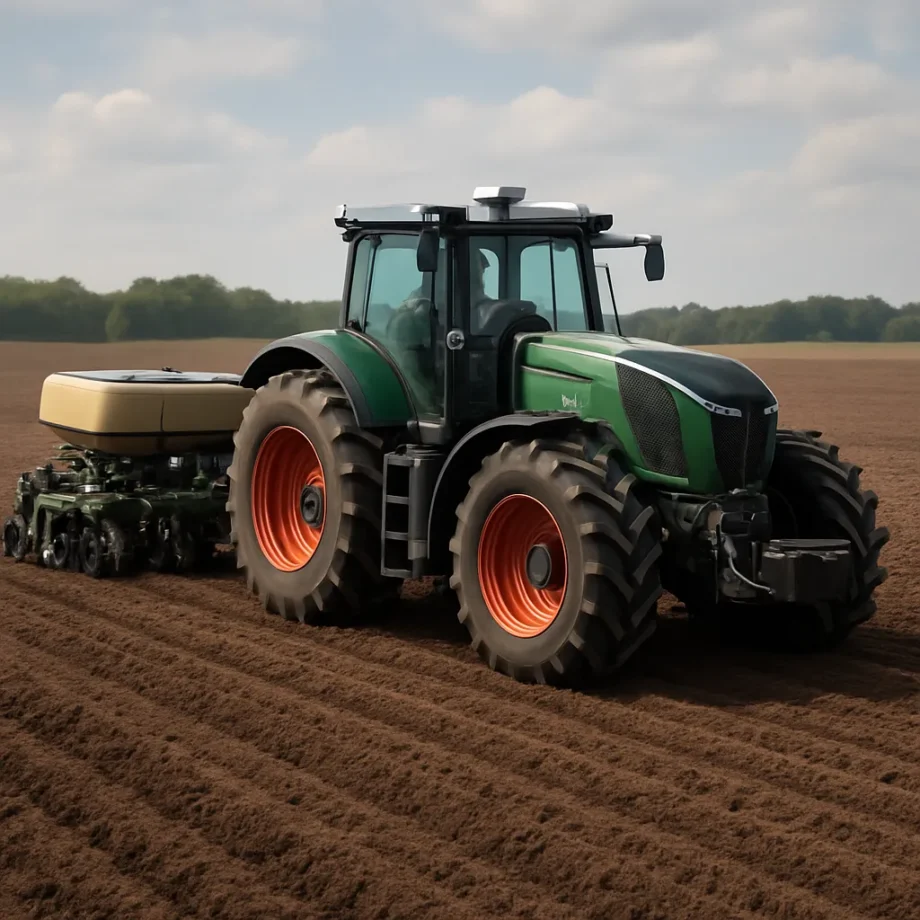
Advancements in agricultural technology are reshaping how crops are sown, with a new emphasis on autonomous seeder and planter systems. These machines combine cutting-edge hardware and software to deliver unparalleled speed, accuracy, and adaptability across varied terrains and climates. By integrating real-time data processing, precise actuation, and remote monitoring, modern planters aim to maximize yield potential while minimizing resource inputs and environmental impact.
Technological Foundations of Autonomous Seeder and Planter Systems
At the heart of every next-generation seeder lies a suite of intelligent components designed to work in concert.
Integration of AI and Machine Learning
Manufacturers are embedding artificial intelligence algorithms and machine learning models into on-board controllers. These systems analyze variables like soil moisture, temperature, and nutrient levels to dynamically adjust seed spacing, depth, and population. Over time, they learn from past passes to fine-tune operational parameters, improving planting uniformity and reducing seed waste.
Advanced Sensor Suites
State-of-the-art sensors measure pressure, flow, and position in real time. LiDAR units scan field contours, while multispectral cameras identify soil heterogeneity. Together with GNSS guidance, these inputs allow machines to maintain centimeter-level accuracy even at high operating speeds. Such precision reduces overlaps and skips, optimizing input usage and ensuring consistent germination rates.
Integration with Precision Agriculture
Autonomous planters are only one piece of a broader precision agriculture ecosystem. Seamless connectivity and data sharing drive smarter decisions at every stage of the crop cycle.
- Connectivity platforms unite tractors, combine harvesters, sprayers, and seeders into a cohesive fleet. Real-time telemetry reports machine health, seed usage, and field coverage.
- Cloud-based data analytics tools process yield maps and prescription files to generate variable-rate planting plans tailored to each field’s unique profile.
- Integration with farm management software ensures that planting activities sync with irrigation schedules, fertilization programs, and weather forecasts, fostering holistic resource management.
By embracing a networked approach, growers unlock unprecedented visibility into operational efficiency, enabling proactive maintenance and quick adaptation to evolving conditions.
Economic and Environmental Advantages
As farmers face tighter margins and mounting ecological concerns, autonomous seeder systems offer a compelling value proposition.
- Efficiency gains from precise seed placement translate into higher crop stands per acre and more uniform emergence.
- Reduced overlap and optimized seeding rates cut seed costs by up to 15%, while minimizing soil compaction and fuel consumption.
- Variable-rate technology supports targeted input application, leading to lower fertilizer and pesticide usage, which in turn enhances sustainability metrics.
- Automated workflows free operators from tedious manual tasks, allowing skilled labor to focus on strategic decisions rather than repetitive routines.
Long-term financial models predict that the return on investment for autonomous planters can be realized within three to five seasons, depending on farm size and crop value.
Challenges and Future Developments
Despite rapid progress, several hurdles remain before autonomous seeders become ubiquitous across all farm scales.
Regulatory and Safety Considerations
Ensuring reliable obstacle detection and safe machine stoppage in populated fields is paramount. Regulatory bodies are developing standards for unattended operation, but widespread adoption depends on rigorous testing and certification processes.
Interoperability and Standardization
The diversity of equipment brands and data formats can impede seamless integration. Industry stakeholders are collaborating on open protocols to ensure that tractors, planters, and precision tools communicate effortlessly, reducing compatibility headaches for end users.
Emerging Innovations
Future breakthroughs will likely center on swarm robotics, where fleets of smaller, lighter seeders work cooperatively to cover large areas with minimal soil disturbance. Enhanced electric drivetrains and renewable energy harvesting may further reduce carbon footprints. Additionally, real-time in-situ analysis of soil biota and microbial activity could enable even finer customization of planting strategies.
Continued innovation in materials science and actuation mechanisms will drive down equipment costs, making autonomous planting accessible to mid-sized and smaller farms. As technologies mature, the convergence of robotics, predictive analytics, and agronomy promises to usher in a new era of resilient, high-productivity cropping systems.