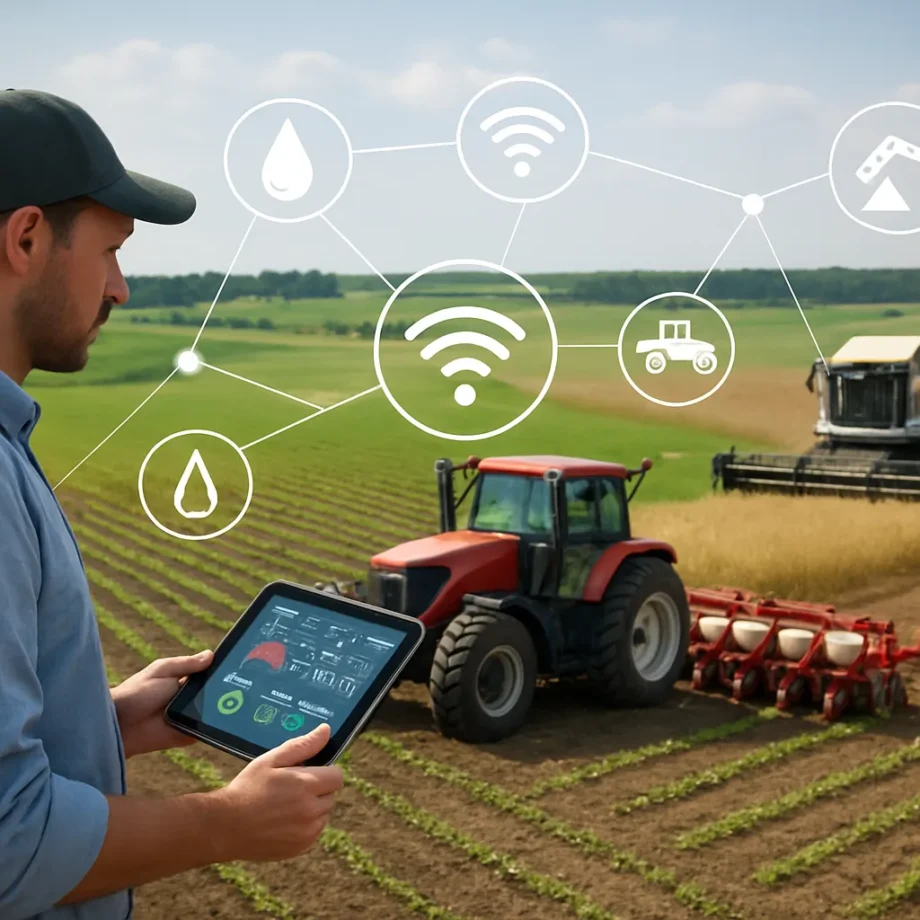
Across sprawling fields, a silent revolution is underway as every piece of agricultural machinery becomes part of a unified network. Farmers can now harness sensors, GPS modules, and wireless transceivers to capture real-time data from tractors, combines, and irrigation systems. This digital transformation empowers growers with unparalleled insights, driving unprecedented efficiency and resource management.
Smart Machinery and Connectivity
Modern farm equipment integrates a web of embedded connectivity modules and communication protocols. Tractors, sprayers, and planters come equipped with cellular, LoRaWAN, or satellite links, enabling seamless data exchange across vast acres. Onboard telematics platforms record engine performance, fuel consumption, and working speed, transmitting this information to centralized dashboards. Farmers gain a holistic view of operations, identifying bottlenecks and fine-tuning workflows. By combining GPS guidance with automated steering, machines achieve centimeter-level accuracy, reducing overlap and saving time.
Tractors as IoT Hubs
Once simple pulling vehicles, tractors now serve as mobile command centers. Each unit hosts an array of telemetry sensors that track engine health, hydraulic pressure, and soil conditions. Data streams flow through in-cabin gateways to cloud servers, enabling remote monitoring and firmware updates. Technicians can troubleshoot issues before they escalate, scheduling maintenance windows that minimize downtime. In essence, tractors have evolved into self-reporting assets that communicate their status continuously, fostering proactive maintenance strategies.
Harvesters and Drones Integration
Combines and forage harvesters are no longer standalone machines. They link with aerial drones, sharing field maps and crop health imagery in real time. Drones scan for nutrient deficiencies, pest infestations, or yield variations, relaying geotagged images to harvesters that adjust cutting height or threshing speed accordingly. This synergy enhances harvest quality while reducing grain losses. By coordinating path planning between ground and air units, farms optimize coverage and resource allocation, leading to smoother operations during critical harvest windows.
Data Management and Analytics
Collecting data is only the first step; making sense of it requires advanced tools. Cloud-based platforms aggregate information from multiple farms, applying machine learning algorithms and AI engines to detect patterns. Predictive models forecast crop yields, irrigation needs, and equipment failures. With automated alerts, farmers can respond swiftly to emerging risks. Key benefits include:
- Automated fault detection and service scheduling
- Adaptive irrigation tailored to soil moisture readings
- Variable-rate fertilization based on nutrient mapping
- Supply chain coordination to align harvest volumes with market demand
These insights drive continuous optimization of inputs, helping to balance productivity with sustainability.
Autonomous Systems and Robotics
Autonomous tractors and robotic harvesters are transitioning from prototypes to field-ready solutions. Ground robots navigate rows of crops using LiDAR and computer vision, performing tasks such as weeding, seeding, and crop scouting. Self-driving tractors follow preprogrammed routes, adjusting speed and heading to account for obstacles and soil variability. In greenhouses, robotic arms handle delicate fruits, picking and sorting with millimeter precision. This wave of automation reduces labor costs and addresses workforce shortages while allowing human operators to focus on strategy rather than routine chores.
Security, Scalability, and Sustainability
Linking every machine on the farm demands robust cybersecurity measures. Encryption, device authentication, and secure firmware updates guard against unauthorized access. Network designers must balance bandwidth requirements with coverage across remote fields, often combining multiple wireless technologies. Scalability is critical: as fleets expand, platforms must accommodate new nodes without degrading performance. By integrating electric and hybrid powertrains, manufacturers are also reducing carbon footprints. Combined with precision farming practices, these advances support environmental stewardship and long-term profitability.
Future Perspectives
The convergence of 5G, edge computing, and enhanced satellite services promises even greater connectivity. Edge processors will analyze data on the machine itself, minimizing latency for time-critical operations like autonomous navigation. Collaborative robots—both aerial and terrestrial—will work alongside tractors, forming adaptive fleets that reconfigure in response to field conditions. As interoperability standards mature, equipment from different brands will communicate fluidly, breaking down silos. The result is an agricultural ecosystem where every implement, sensor, and vehicle contributes to a unified intelligence, laying the foundation for truly smart farms.