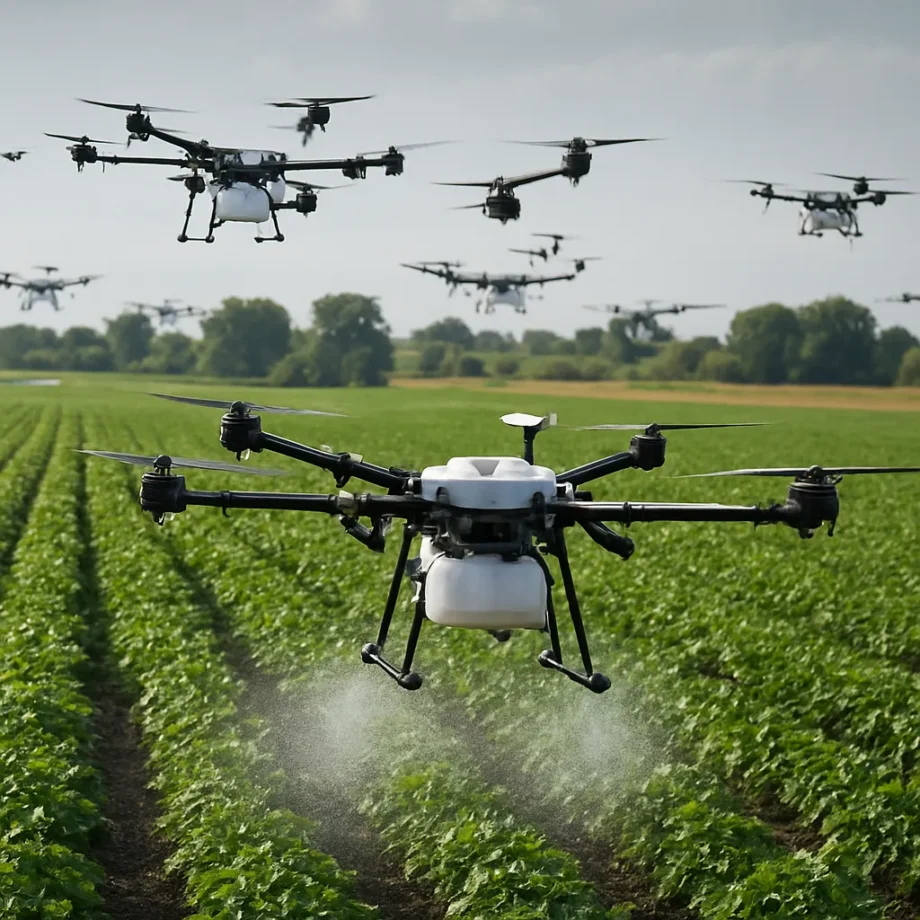
Emerging agricultural machinery has reshaped modern farming landscapes, with innovative systems poised to enhance productivity, lower environmental footprints, and streamline operations. Among these breakthroughs, drone swarms stand out as a transformative force, offering alternatives to bulky, less agile equipment. By harnessing advanced sensors, intelligent flight patterns, and collaborative robotics, these aerial fleets promise to revolutionize how farmers approach crop protection and field management.
Innovations in Drone-Based Crop Spraying
Over the past decade, unmanned aerial vehicles have advanced from hobbyist gadgets to professional-grade tools. Today’s agricultural drones come equipped with high-resolution cameras, multispectral sensors, and modular spray systems, enabling targeted applications of pesticides, herbicides, and nutrients. The concept of deploying multiple drones in a coordinated fashion introduces precision at the field level, where each unit can be programmed to follow unique flight paths and apply varying dosages based on real-time data.
Key technological pillars include:
- Smart navigation using GPS and local RTK corrections for centimeter-level accuracy.
- Onboard processing units for immediate image analysis and decision-making.
- Swarm intelligence algorithms that enable units to communicate and avoid collisions.
- Lightweight, corrosion-resistant materials for enhanced durability under harsh conditions.
By combining these features, drone fleets can cover complex topographies, adjust routes in response to obstacles, and optimize spray patterns for maximum coverage with minimal waste. The resulting efficiency gains not only reduce labor requirements but also cut down on chemical usage.
Comparative Analysis with Traditional Machinery
Conventional sprayers, whether tractor-mounted booms or air-assisted backpack units, have served generations of farmers. However, they face limitations in adaptability, maneuverability, and environmental impact:
- Bulk and Ground Pressure: Heavy equipment compacts soil, impeding root growth and water infiltration.
- Uniform Application: Fixed spray widths struggle to accommodate variable plant heights or patchy infestations.
- Labor Intensity: Operating large machinery requires skilled operators and significant downtime for maintenance.
- Drift and Runoff: High-pressure sprays can create drift, exposing non-target areas to chemicals.
In contrast, synchronized drone deployments offer:
- Minimal soil disturbance thanks to aerial operation.
- Adaptive spray volumes tailored to specific crop zones using pre-mapped data.
- Reduced drift, as low-altitude flights enable precise drop placement.
- Scalable fleets that farmers can expand or contract based on seasonality.
When evaluating life-cycle costs, the upfront investment in drones is often offset within a few seasons by savings in chemical inputs, fuel, and labor, showcasing cost-effectiveness.
Precision Agriculture and Data-Driven Decisions
One of the hallmarks of modern farming is leveraging granular insights to inform interventions. Drones excel at collecting high-resolution imagery, thermal readings, and spectral indices that reveal crop health, moisture stress, and pest presence. By processing these data streams through machine learning pipelines, operators can generate prescription maps that direct each drone to administer exact doses within specific field zones. This level of integration between data acquisition and actuation fosters a closed-loop system, where continuous feedback refines future applications.
Role of Data Analytics
- Classification algorithms distinguish between crop canopy and weeds, enabling spot treatments.
- Time-series analysis tracks vegetative growth rates to predict optimal spraying windows.
- Clustering techniques group similar stress patterns, guiding targeted nutrient applications.
Through these processes, drone fleets transform from mere delivery platforms into intelligent partners, dynamically adjusting flight plans and spray parameters to evolving field conditions. Such sustainability-oriented approaches minimize environmental loads while maximizing yields.
Environmental and Economic Impacts
Replacing large-scale sprayers with coordinated drones yields multiple benefits:
- Reduced Chemical Use: Precise targeting prevents over-application, lowering runoff into waterways.
- Lower Emissions: Electric-powered UAVs eliminate diesel combustion associated with tractors and crop dusters.
- Resource Conservation: Optimized spray patterns conserve water and inputs, supporting resource-limited regions.
- Enhanced Crop Health: Fast response to early pest or disease outbreaks reduces crop losses.
From an economic standpoint, smaller farms gain access to advanced spraying capabilities without purchasing oversized machinery. Service providers can deploy drone fleets across multiple clients, achieving economies of scale. The resulting flexibility and agility align with modern agribusiness models, where seasonal demands fluctuate widely.
Challenges, Regulations, and Future Perspectives
Despite promising advancements, widespread adoption of drone swarms faces hurdles. Regulatory frameworks for unmanned operations vary by country, often restricting flight altitudes, swarming behaviors, or beyond-visual-line-of-sight (BVLOS) missions. Ensuring robust autonomy and fail-safe protocols remains vital to avoid mid-air collisions or unintended chemical discharges.
Technical challenges include battery life constraints, weather sensitivity, and interoperability among different drone brands. Achieving seamless coordination requires open communication standards and secure protocols to prevent interference or hacking. Ongoing research into hydrogen fuel cells, swappable battery modules, and advanced sensor fusion promises to extend operational ranges and improve reliability.
Looking ahead, the convergence of robotics, artificial intelligence, and agronomic expertise will drive further adaptability of swarm systems. Hybrid ground-aerial teams may combine the field coverage of rovers with the rapid deployment of drones. Real-time cloud connectivity and edge computing will empower farmers to manage fleets remotely, orchestrating hundreds of units with a single dashboard. As these technologies mature, drone-based spraying could represent not only an alternative to traditional machinery but the new standard for sustainable, high-yield agriculture.