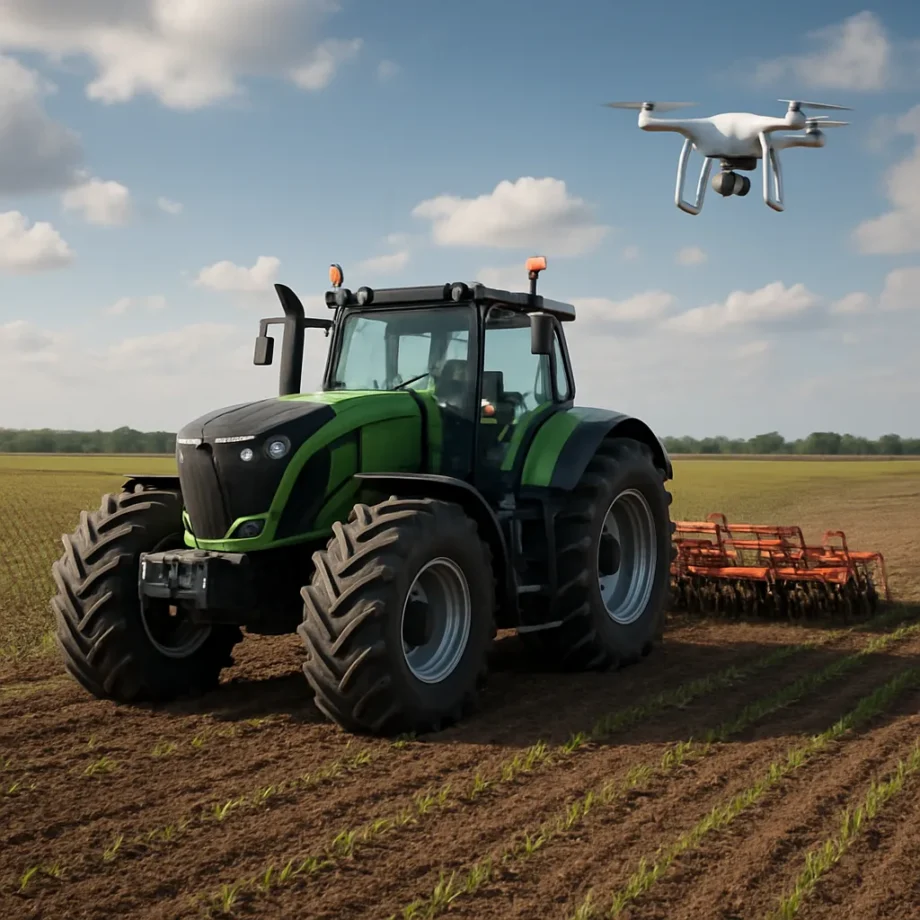
As the agricultural sector evolves, the integration of remote-controlled farm vehicles marks a pivotal shift in how farmers manage large-scale operations. By leveraging cutting-edge technologies, these machines redefine traditional practices, optimizing field tasks and enhancing overall productivity. This article delves into the transformative impact of remote-controlled machinery, exploring its development, benefits, and future trajectories within modern agriculture.
Advancements in Remote-Controlled Agricultural Machinery
Over the past decade, manufacturers have introduced a new generation of robotics platforms designed for various farming operations, from plowing and planting to harvesting and spraying. These vehicles often incorporate multiple subsystems:
- Autonomy modules, which allow tractors and harvesters to navigate fields with minimal human intervention.
- High-resolution sensor arrays, including LiDAR, multispectral cameras, and ultrasonic detectors, for real-time environment mapping.
- Advanced telemetry systems that transmit operational data to centralized dashboards, enabling remote monitoring.
- Electric or hybrid powertrains, reducing reliance on fossil fuels and lowering carbon footprints.
Manufacturers continuously refine these platforms through iterative design sprints, integrating feedback from agronomists and field technicians. Trials spanning various terrains, soil types, and weather conditions ensure each vehicle meets stringent durability and performance standards.
Precision Guidance and Navigation
Central to remote control capabilities is the deployment of GNSS-based guidance systems. Combining GPS with RTK (Real-Time Kinematic) corrections, vehicles achieve centimeter-level accuracy, crucial for tasks like precision seeding or targeted fertilization. The synergy between connectivity networks and on-board processing units allows smooth path reconfiguration, even in obstructed or remote areas where signal strength fluctuates.
Modular Attachments and Interchangeable Tools
Versatility in agricultural machinery often hinges on the ability to swap implements rapidly. Remote-controlled tractors are now designed with universal couplers accommodating a spectrum of attachments—plows, seed drills, sprayers, and mowers. Such modularity slashes downtime between operations, maximizing daily field coverage and ensuring optimal resource utilization.
Benefits and Challenges
Implementing remote-controlled vehicles yields numerous advantages, yet presents hurdles that demand strategic solutions.
Key Advantages
- Efficiency: Automated vehicles operate continuously without fatigue, significantly boosting daily work cycles.
- Labor shortage mitigation: With fewer skilled workers available in rural regions, remote control systems fill critical gaps.
- Improved precision: Consistent, sensor-driven operations reduce overlap and minimize input waste, whether seeds, water, or chemicals.
- Enhanced safety: By outsourcing hazardous tasks—spraying chemicals or maneuvering steep slopes—to machines, human exposure to risk decreases.
- Data-driven decision-making: Integrated data platforms consolidate real-time field metrics, guiding crop management strategies.
Technical and Operational Challenges
- High initial capital costs: Advanced remote-controlled units and accompanying infrastructure require significant investment.
- Connectivity constraints: Rural broadband limitations can impede vehicle responsiveness in remote areas.
- System integration: Harmonizing diverse sensors, software modules, and implements demands robust interoperability standards.
- Maintenance complexity: Sophisticated electronics and mechanical subsystems necessitate specialized diagnostics and repair expertise.
- Regulatory frameworks: Governments must adapt policies to ensure safe deployment, spectrum allocation, and liability norms.
Integrating AI and IoT in Farming Equipment
The convergence of the Internet of Things (IoT) and artificial intelligence creates a fertile ground for innovation in agricultural machinery. By embedding smart algorithms, remote-controlled vehicles can analyze field conditions, predict maintenance needs, and optimize resource allocation.
Predictive Maintenance and Machine Learning
IoT-enabled components continuously monitor engine parameters, hydraulic pressures, and structural stresses. Machine learning models process these inputs, forecasting potential failures before they occur. Predictive maintenance packages not only reduce downtime but also extend the lifespan of expensive equipment.
Real-Time Crop Monitoring and Adaptive Operations
Equipped with multispectral cameras, remote-controlled platforms can assess plant health indices such as NDVI (Normalized Difference Vegetation Index). Coupled with AI, the system identifies zones requiring targeted irrigation or nutrient application. This level of granularity fosters sustainability by conserving water and minimizing fertilizer runoff.
Cloud-Based Fleet Management
Modern farms often deploy mixed fleets—tractors, drones, autonomous sprayers—coordinated from centralized software. Cloud platforms aggregate data streams from each unit, offering interactive maps and task workflows. Managers can assign priorities, track progress, and adjust operations via mobile devices, ensuring maximum connectivity across the supply chain.
Future Perspectives and Emerging Trends
As the sector embraces digital transformation, remote-controlled vehicles will evolve along several trajectories:
Swarm Robotics and Collaborative Operations
Inspired by collective behavior in nature, multiple smaller robots could operate in concert, dividing large fields into microzones. Through peer-to-peer communication, these swarms dynamically allocate tasks, maintaining uniform coverage and adapting to localized conditions.
Advanced Human–Machine Interfaces
Next-generation platforms will likely feature more intuitive interfaces, including augmented reality (AR) overlays and gesture recognition. These enhancements reduce training curves, allowing operators to control multiple vehicles simultaneously using simplified dashboards or AR headsets.
Enhanced Energy Solutions
Battery technologies and renewable integrations—such as solar panels on vehicle roofs—will extend operational endurance. Energy management systems will optimize power distribution between propulsion, sensors, and control modules, driving further gains in efficiency and reducing greenhouse gas emissions.
Regulatory and Ethical Considerations
As autonomy levels increase, policymakers must address data privacy, cybersecurity, and liability issues. Establishing clear frameworks for data ownership and safe AI deployment will be paramount. International collaboration can harmonize standards, ensuring equitable access to transformative technologies.
Capitalizing on the momentum of digital agriculture, the industry stands at the threshold of a new era. Remote-controlled farm vehicles promise not only to elevate productivity but also to foster more sustainable and resilient food systems worldwide. By continuing to refine these solutions and reimagining operational paradigms, farmers can tackle pressing challenges—from labor shortages to climate disruptions—while feeding a growing global population.