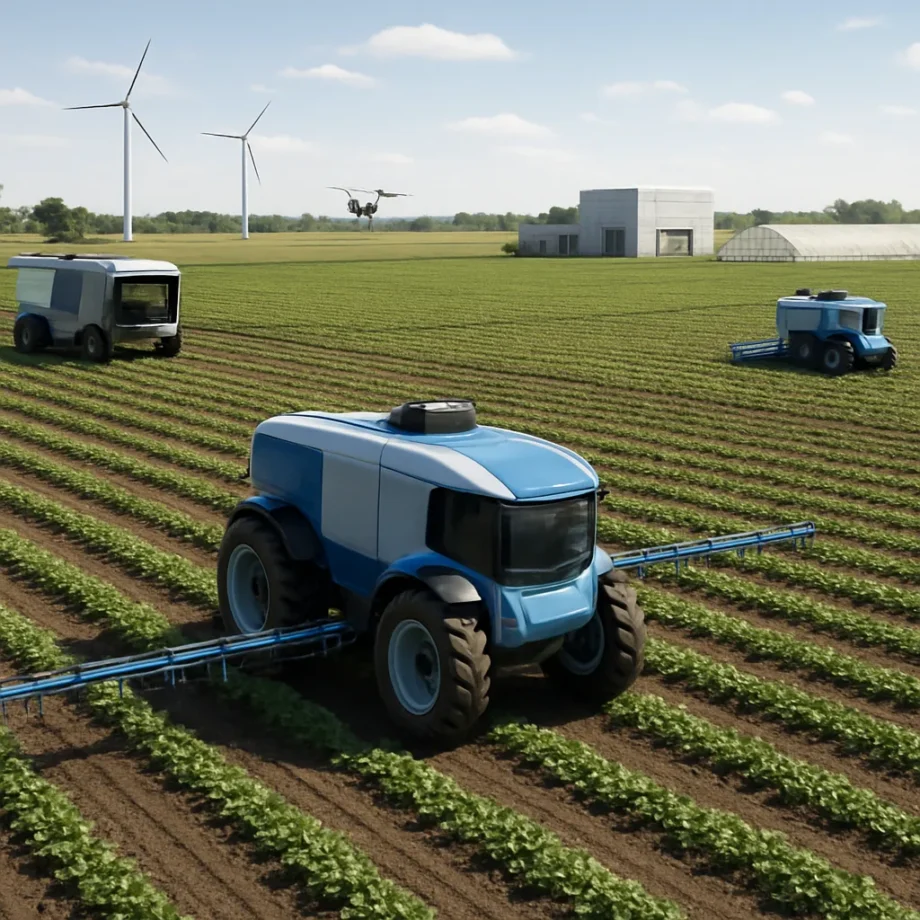
Imagine a landscape where rolling fields hum with automation and every machine is interconnected through connectivity. The farm of 2050 will no longer rely solely on human labor for sowing, monitoring, and harvesting crops. Instead, a fleet of robots and drones, guided by AI and real-time data, will work in harmony to maximize yield while preserving the environment. This transformation promises higher efficiency, improved sustainability, and better resource management for an ever-growing global population.
Technological Advances Driving the Next Generation of Agricultural Machinery
Autonomous Tractors and Harvesters
By 2050, self-driving tractors equipped with advanced sensors will plow fields with pinpoint precision. These vehicles will navigate using high-definition GPS and LiDAR systems, adjusting their path in real time to avoid obstacles, conserve soil structure, and optimize furrow depth. Harvesters, on the other hand, will use machine vision to identify ripe produce and selectively pick fruits or vegetables without damaging plants. The integration of modular attachments will allow a single chassis to perform multiple tasks—from tilling to seeding—dramatically reducing machinery costs and idle time.
Drone Integration for Crop Management
Drones will no longer be mere novelty gadgets but essential tools for crop surveillance and treatment. Swarms of lightweight UAVs will fly over expansive fields, capturing multispectral images to detect nutrient deficiencies, pest infestations, and emerging diseases long before they become visible to the naked eye. Some drones will carry micro-spray systems, delivering targeted applications of water, fertilizers, or biopesticides only where needed. This precision spraying will minimize chemical runoff, cut input costs, and help farmers adhere to stricter environmental regulations.
Data-Driven Farming: Sensors, AI, and Connectivity
Precision Agriculture Through Real-Time Monitoring
Fields will be embedded with an array of ground-based and aerial sensors that continuously measure soil moisture, temperature, pH, and nutrient levels. Data from these sensors will flow into cloud-based platforms, where powerful analytics engines interpret the information and send actionable insights back to farm managers. Irregularities such as dry patches or nutrient hotspots will trigger automated irrigation or fertilization routines, ensuring that every square meter receives exactly what it needs for optimal growth.
Machine Learning and Predictive Analytics
Artificial intelligence algorithms will analyze historical weather patterns, crop performance, and market trends to forecast yield and recommend planting schedules. Predictive models will help farmers decide which crop varieties to plant and when to plant them to maximize profit and resilience to climate variability. Over time, the system will learn from each season’s outcomes, continuously refining its recommendations. This closed-loop learning process will foster a culture of efficiency and innovation on every farm.
Sustainability and Resource Management
Water Conservation and Soil Health
Automated irrigation networks will use real-time soil moisture readings to deliver water only when and where it is needed. Combined with sub-surface drip systems and moisture-retaining soil amendments, these networks will reduce water usage by up to 60%. Meanwhile, cover-crop seeders mounted on autonomous platforms will sow protective vegetation immediately after harvest, preventing erosion, fixing nitrogen naturally, and enhancing soil organic matter. This holistic approach will preserve vital topsoil for future generations.
Renewable Energy Integration
Solar panels, wind turbines, and bioenergy units will power the majority of on-farm operations, reducing dependence on fossil fuels. Tractors and implements may run on hydrogen fuel cells or electric battery packs that recharge at solar-powered stations positioned strategically around fields. Excess energy generated during peak sun or wind hours will be stored in smart microgrids, ensuring uninterrupted operation of robots and monitoring systems even during adverse weather conditions.
Challenges and Future Prospects
Technological Barriers and Adoption
Despite the promise of full automation, several obstacles remain. High upfront costs for advanced machinery may deter small-scale farmers, necessitating innovative financing models like equipment-as-a-service. Interoperability standards must be established so that machines from different manufacturers can communicate seamlessly. Robust cybersecurity measures will be essential to protect agricultural data and prevent malicious interference with autonomous fleets.
Regulatory and Social Considerations
Policy frameworks will need to evolve to accommodate driverless vehicles on rural highways and establish liability in the event of mechanical failures. Workforce implications also demand attention: as manual labor declines, new roles will emerge in data analysis, equipment maintenance, and agronomic consulting. Educational programs must adapt to equip the next generation of farmers with skills in robotics, software, and sustainable resource management.
The Path Forward
Collaborative Innovation
Partnerships between equipment manufacturers, tech startups, research institutions, and farming cooperatives will drive the iterative development of smarter, more adaptable machines. Open-source platforms will facilitate rapid prototyping and collective problem-solving, ensuring that breakthroughs reach the field swiftly.
Global Impact and Food Security
By harnessing the synergy of automation, AI, connectivity, and sustainable practices, the fully automated farm of 2050 will boost productivity while reducing environmental footprints. This revolution has the potential to secure food supplies for billions, stabilize commodity prices, and safeguard fragile ecosystems for future generations.