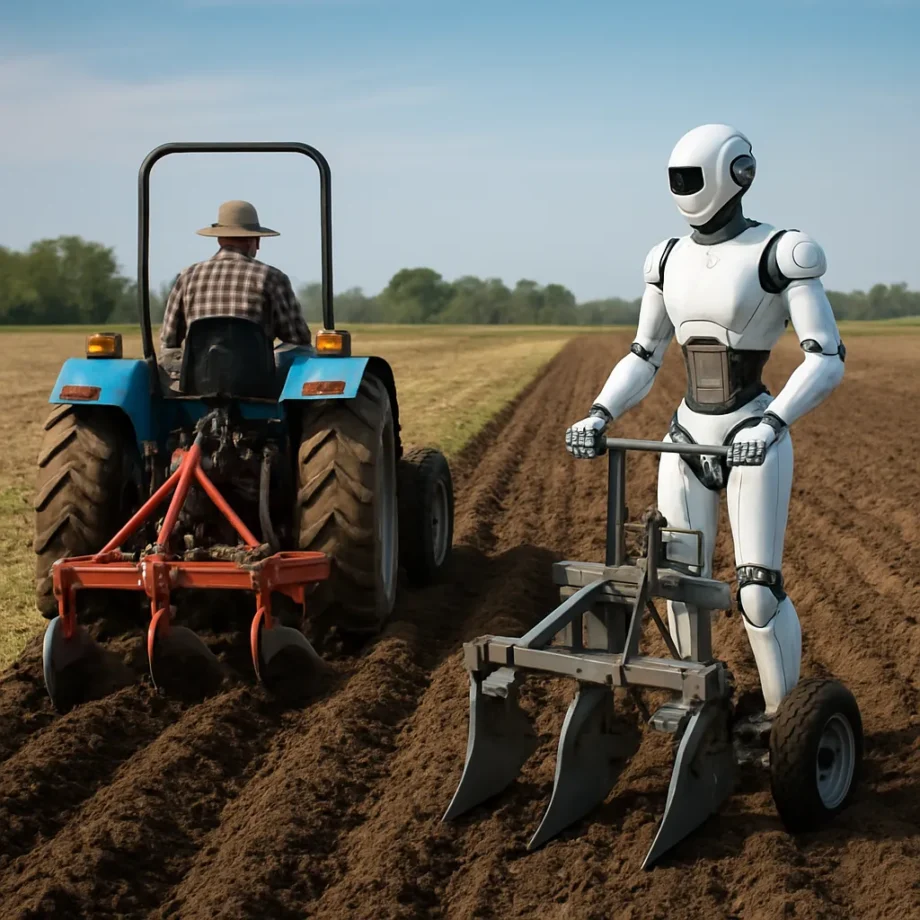
Advancements in agricultural technology have reshaped the way farmers cultivate fields, manage crops, and ensure food security. From steel ploughshares to high-tech machinery, the journey has been marked by relentless innovation and the quest for greater efficiency. In this article, we explore how the fusion of AI and robotics will phase out manual ploughing, transforming farms into hubs of productivity and sustainability.
Evolution of Traditional Ploughing and Machinery
For millennia, ploughing depended on human muscle power or draft animals. The simple wooden plough, eventually reinforced with iron, allowed early farmers to break soil and prepare seedbeds. However, the pace was slow and labor-intensive. The Industrial Revolution sparked the creation of the first mechanized ploughs, driven by steam engines and later by diesel tractors.
Key milestones in agricultural machinery include:
- Introduction of the steel moldboard plough
- Steam-powered traction engines
- Internal combustion tractors with hydraulic lifts
- GPS-guided auto-steering systems
Despite these advances, conventional ploughing still requires skilled operators, significant fuel consumption, and meticulous field planning. The next frontier is to integrate GPS, sensors, and machine learning into autonomous systems, phasing out manual intervention.
Integration of AI and Robotics in Modern Farming
Today’s smart farms deploy AI algorithms to analyze soil composition, moisture levels, and crop health. Combined with precision machinery, automated ploughs can adapt tillage depth and pattern in real time. Key components include:
- Computer Vision: Cameras and LIDAR detect obstacles, crop rows, and soil irregularities.
- Autonomous Vehicles: Self-driving tractors navigate fields using satellite data and local beacons.
- IoT Connectivity: Sensors transmit soil pH, nutrient content, and weather forecasts to central systems.
Robotic ploughs are fitted with adjustable coulters and disc blades, enabling them to:
- Vary ploughing depth according to soil density
- Avoid compacting wet zones
- Optimize field coverage to reduce overlaps
Machine-to-machine communication ensures that every plough head operates in sync. This level of integration decreases fuel use by up to 20% and cuts down labor costs significantly. In regions with scarce farm labor, robots perform 24/7 operations regardless of weather or fatigue.
Environmental and Economic Benefits
Automated ploughing systems yield multiple advantages for both the planet and the farmer’s bottom line. By leveraging data-driven decision-making, these machines minimize soil erosion and preserve organic matter. Key benefits include:
- Reduced Carbon Footprint: Precise fuel management lowers greenhouse gas emissions.
- Lower Soil Disturbance: Variable-depth blades protect earthworms and beneficial microbes.
- Efficient Resource Use: Targeted tillage cuts water and fertilizer waste.
On the economic side, automating ploughing:
- Slashes labor expenses by reducing the need for skilled drivers
- Increases planting windows due to faster field turnaround
- Improves yield consistency via uniform seedbed preparation
Early adopters report up to 15% higher yields and a significant drop in machinery wear and tear. The initial investment in autonomous tractors and robotic implements pays off within three to five seasons, especially for large-scale operations.
Challenges and Future Perspectives
Despite impressive gains, several obstacles remain on the path to fully autonomous ploughing. Technological hurdles include:
- Terrain Complexity: Uneven fields demand advanced obstacle detection and adaptive suspension.
- Data Security: Ensuring that farm data and machine controls remain protected from cyber threats.
- Standardization: Harmonizing communication protocols across different equipment brands.
Moreover, smallholder farmers may struggle with capital requirements and training. Cooperative models or custom-hire services could bridge this gap, allowing broader access to high-end machinery.
Looking ahead, researchers are combining robotics with biological sensors to create truly smart ploughing systems. These machines will identify nutrient deficiencies on the go and dispense micro-doses of amendment directly into the furrow. Integration with aerial drones will provide even finer-scale mapping, enabling split-second adjustments to blade angle and speed.
As automation matures, the role of the farmer will shift from manual operation to system management. By interpreting rich streams of agronomic data, farm managers can orchestrate a fleet of robotic units, driving unprecedented gains in productivity and sustainability. The era of back-breaking ploughing is drawing to a close, replaced by a network of intelligent machines that work in harmony with nature.