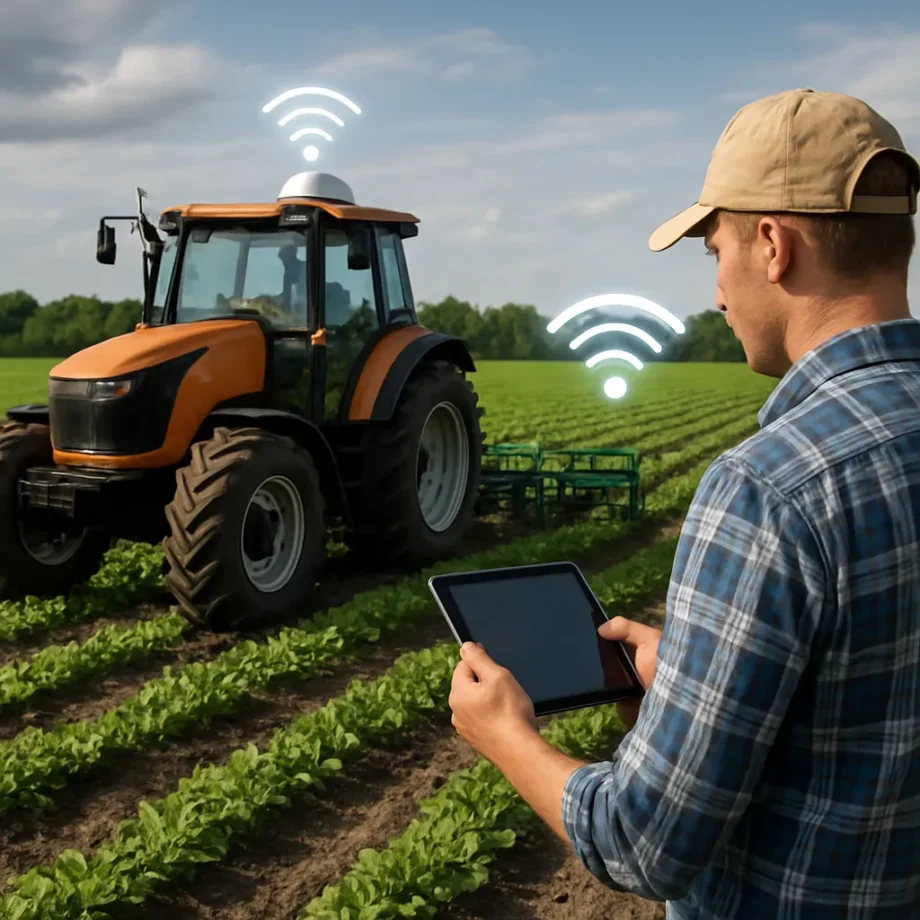
The arrival of 5G networks marks a significant shift in agricultural technology, ushering in an era of unparalleled connectivity across fields, machinery, and data platforms. Smart farming equipment powered by this advanced network can harvest more than just crops—it can extract insights, enhance performance, and redefine the way operations scale. With ultra-low latency and massive device support, farmers now have the tools to optimize every aspect of their operation. From autonomous tractors navigating uneven terrain to drones surveying expansive fields, the synergy between cutting-edge hardware and 5G’s robust infrastructure promises a new chapter of precision agriculture that directly boosts yield, resource management, and environmental stewardship.
Enhancing Field Operations with Ultra-fast Connectivity
The leap from 4G to 5G goes beyond faster download speeds. In the context of agriculture, this upgrade enables real-time command and control of machinery across large tracts of land. Tractors, harvesters, and seed planters can transmit and receive instructions in milliseconds, ensuring that any adjustment—whether it’s speed, route, or seeding density—is executed without delay. This high-speed link also allows for live streaming of high-resolution video feeds from multiple cameras mounted on equipment, offering farm managers an immediate overview of field conditions.
Key advantages include:
- Reduced operational downtime thanks to instantaneous diagnostics and remote troubleshooting.
- Coordinated fleet movements that minimize overlaps and gaps in coverage.
- Adaptive field mapping where machines share location data to refine planting and harvesting patterns.
Moreover, 5G’s enhanced bandwidth means that dozens of devices—tractors, soil probes, weather stations—can be online simultaneously without network congestion, delivering consistent performance in even the most equipment-dense environments.
Intelligent Equipment and Automated Workflows
Automation has been a buzzword in agriculture for years, but the reliability of wireless connections often limited its full potential. With 5G’s deterministic latency, autonomous vehicles can navigate complex obstacles, coordinate group maneuvers, and make split-second decisions. Millimeter-wave frequencies facilitate the integration of high-definition sensors—including LiDAR and multispectral cameras—embedded in both ground vehicles and aerial drones.
Advanced Features Enabled by 5G:
- Precision sowing calibrated to soil nutrient maps, ensuring seeds are placed in optimal microplots.
- Real-time environmental monitoring, where microclimate data triggers automated irrigation or spraying routines.
- Swarm robotics, allowing multiple machines to collaborate on tasks like weeding or fruit picking.
These automated workflows translate into higher efficiency and lower labor costs. Farmhands can oversee entire fleets from a remote control center, intervening only when human judgment is required. The result is a flexible workforce model that scales according to seasonal demands.
Data Management: Telemetry and Predictive Diagnostics
Smart farming equipment generates vast amounts of telemetry data—from engine performance metrics to soil moisture levels and pest activity. Previously, the sheer volume of information strained local networks and stalled in-field decision-making. Thanks to 5G’s expansive capacity, data streams flow uninterrupted to cloud platforms, where advanced analytics and machine learning algorithms process them in real time.
Benefits of Scalable Data Processing:
- Early detection of mechanical faults, reducing breakdowns through predictive maintenance alerts.
- Dynamic resource allocation, adjusting fertilizer and water delivery based on live crop health indices.
- Historical trend analysis for better crop rotation planning and yield forecasting.
By harnessing this continuous feedback loop, farmers gain a deeper understanding of field dynamics and can respond instantly to emerging challenges. This level of insight drives sustainable practices by minimizing waste and optimizing inputs—a direct path toward environmental sustainability.
Overcoming Obstacles and Charting Future Horizons
Despite its promise, the rollout of 5G in rural areas faces hurdles: infrastructure costs, signal coverage over undulating terrain, and integration with legacy equipment. Collaborative efforts between telecom providers, equipment manufacturers, and agricultural cooperatives are essential to address these challenges. Innovative solutions such as private cellular networks on farms and edge computing nodes can bridge coverage gaps and provide localized processing power.
Looking ahead, the convergence of 5G with emerging technologies—augmented reality for remote equipment training, blockchain for transparent supply chains, and AI-driven crop modeling—will unlock even greater potential. As connectivity becomes ubiquitous, the boundaries between farmer, machine, and market will blur, creating a truly integrated ecosystem where insights flow seamlessly from field to fork.
Ultimately, the integration of real-time communication, autonomous machinery, and data-driven decision-making establishes a resilient framework for modern agriculture, one built on adaptability, scalability, and continuous improvement.