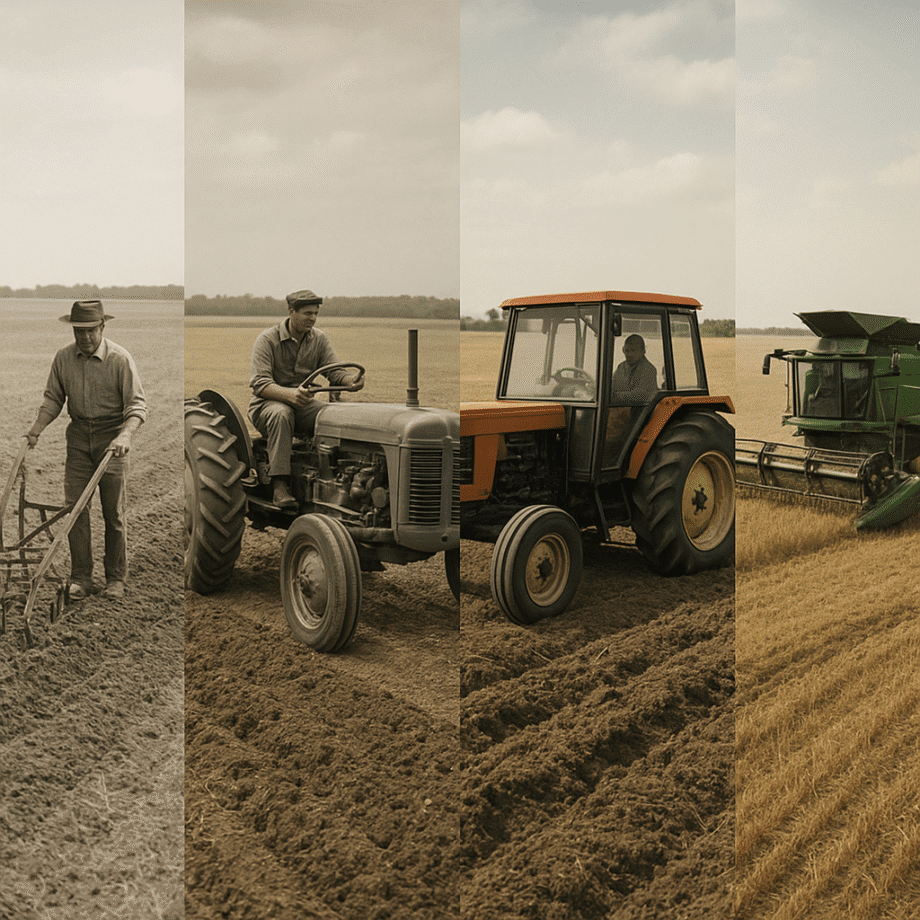
The Evolution of Agricultural Machinery Through the Decades explores how mechanical innovation has reshaped farming practices worldwide. From simple hand tools to today’s data-driven machines, each generation of equipment has delivered enhanced efficiency, reduced labor demands, and increased yield. This article traces pivotal developments, highlighting the machines, methods, and visionaries that propelled agriculture into new eras of productivity and sustainability.
Early Innovations in Agricultural Mechanization
Agriculture relied on animal power and rudimentary tools for millennia. The first significant leap came in the late 18th and early 19th centuries, when inventors introduced mechanical devices to replace human and animal labor. The design of the seed drill by Jethro Tull in 1701 marked a turning point: precise seed placement improved germination rates and crop uniformity. Subsequently, Andrew Meikle’s mechanical threshing machine (1786) separated grain from chaff far faster than manual flailing.
From Plows to Steam Engines
- Cast-iron plows: Enhanced soil turnover and adapted to tougher soils than wooden predecessors.
- Steam traction engines: Emerging by the mid-19th century, these behemoths provided portable power for plowing and threshing.
- Steam-powered tractors: Enabled large-scale cultivation, reducing human fatigue and operational time.
Mechanization spurred the concept of the modern farm, where machinery replaced onerous tasks. Yet early steam engines were heavy, expensive, and prone to breakdowns. Fuel inefficiency and maintenance challenges limited widespread adoption until lighter, more reliable internal combustion engines appeared.
Mid-20th Century Breakthroughs
The first half of the 20th century saw the transition from steam to gasoline and diesel engines. The Fordson tractor (introduced in 1917) revolutionized small farms by making mechanization affordable. By mid-century, combine harvesters integrated reaping, threshing, and winnowing functions, dramatically cutting harvest times and labor costs. This period also witnessed sharp improvements in metallurgy, hydraulics, and engine performance.
Key Developments
- Diesel tractors: Provided greater torque and fuel economy compared to gasoline models.
- Hydraulic systems: Allowed implements such as plows and seeders to be easily lifted and lowered.
- Self-propelled combines: Combined harvesting functions into a single vehicle, boosting field productivity.
During World War II, agricultural machinery manufacturers refocused on meeting food supply needs. Postwar reconstruction in Europe and rebuilding efforts in Asia increased demand for farm equipment. Governments subsidized mechanization programs, viewing them as vital for national food security. By the 1960s, mechanized harvesters, balers, and sprayers had become standard on industrial-scale farms.
The drive for greater productivity spurred research into improved engines, durable components, and easier maintenance. Tractors evolved with power steering, enclosed cabins, and ergonomic controls, making long hours in the field less taxing. The mid-century marked a shift from pure mechanical ingenuity toward more user-friendly designs focused on operator comfort and machine reliability.
Modern Technological Advances
Late 20th and early 21st centuries have been defined by digitalization and precision agriculture. Satellite navigation, computer-controlled planting, and sensor-equipped machinery allow farmers to tailor inputs precisely, minimizing waste and environmental impact. The rise of automation and robotics promises further gains in efficiency and resource management.
Precision Farming Tools
- GPS-guided tractors: Enable centimeter-level accuracy, reducing overlap and saving seeds and fuel.
- Variable rate technology (VRT): Adjusts fertilizer and pesticide application on the go, optimizing use based on soil conditions.
- Yield mapping: Collects real-time data during harvest, helping farmers analyze field performance.
Robotic harvesters for fruits and vegetables demonstrate how connectivity and machine vision are transforming labor-intensive tasks. Drones equipped with multispectral cameras monitor crop health, detecting disease or nutrient deficiencies long before visible symptoms appear. Meanwhile, automated milking systems and feeder robots in livestock operations reduce labor demands and improve animal welfare.
Data-Driven Decision Making
- Farm management software integrates weather forecasts, market prices, and field data to guide strategic planning.
- Cloud-based platforms store hours of sensor data, enabling trend analysis and predictive maintenance schedules.
- IoT devices monitor soil moisture, ambient conditions, and equipment status in real time, alerting farmers to issues immediately.
These advancements have elevated the role of the farmer to that of a high-tech manager. Understanding data analytics, machinery calibration, and remote system troubleshooting are as critical as traditional agronomic knowledge. The industry now focuses on customization—developing implements that suit specific crops, terrains, and local regulations.
Future Trends and Sustainability
Sustainability is driving the next wave of innovation. Consumers expect responsibly produced food, and governments impose stricter environmental regulations. Electric and hybrid tractors are entering trials, promising lower emissions and quieter operation. Energy-saving designs, such as solar-powered irrigation pumps and biofuel-compatible engines, offer alternatives to fossil fuels.
Emerging Concepts
- Swarm robotics: Multiple small machines working collaboratively to plant, weed, and harvest with minimal soil compaction.
- Artificial intelligence: Advanced algorithms optimizing planting schedules, pest control, and supply chain logistics.
- Carbon sequestration equipment: Machinery designed to integrate cover cropping and no-till practices, locking CO₂ in the soil.
Vertical farms and controlled-environment agriculture leverage hydroponics, aeroponics, and LED lighting. While not field machinery in the traditional sense, these systems represent a shift toward resilience against climate variability. Innovations in modular indoor equipment enable local urban production, cutting transport emissions and enabling year-round cultivation.
Collaboration between manufacturers, researchers, and farmers will be crucial in addressing future challenges. Machinery that adapts to unpredictable weather patterns, conserves water, and supports biodiversity will define success. As agricultural equipment evolves, its impact on global food systems remains profound—ensuring that the world can feed a growing population while preserving the planet’s health.