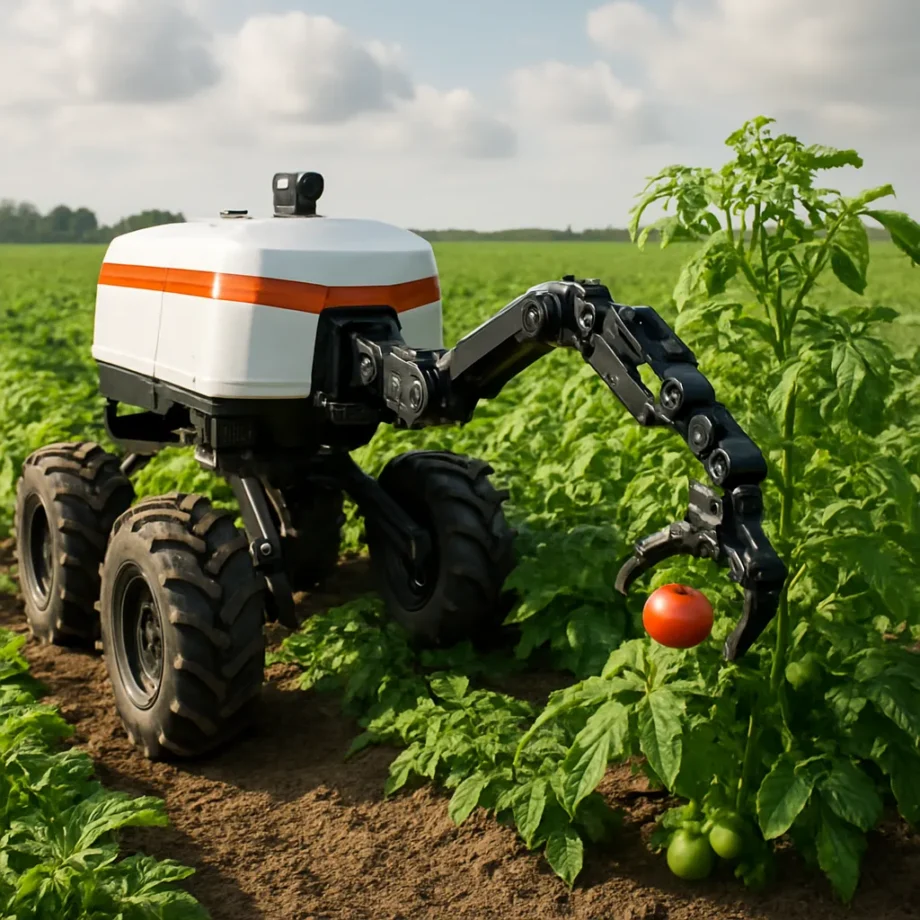
The rapid evolution of **robotics** within agriculture is reshaping how we cultivate, maintain, and **harvest** crops. By marrying advanced **automation** with time-tested machinery, farmers can boost **productivity**, optimize resource use, and navigate the challenges of labor shortages. This article explores key innovations in **agricultural machinery**, the emergence of next-generation **harvesting** platforms, and the technical and environmental hurdles that lie ahead.
Advancements in Agricultural Machinery
Modern farms rely on an array of mechanical solutions designed to streamline tasks from soil preparation to post-harvest processing. Tractors, combines, sprayers, and balers have all seen revolutionary enhancements through the addition of sophisticated electronics and **AI** modules. These upgrades enable real-time adjustments to planting depth, chemical application rates, and yield monitoring, improving overall **efficiency**.
Precision Seeding and Planting
Precision planters equipped with GPS and variable-rate technology ensure each seed is positioned at the optimal depth and spacing. Farmers leverage:
- Sectional control to eliminate overlaps and gaps
- On-board sensors measuring soil moisture and compaction
- Adaptive drive systems for contour farming
These mechanisms translate into more uniform stands, reduced input waste, and higher potential yields.
Smart Spraying and Fertilization
Targeted application platforms harness multispectral cameras and lidar to identify crop stress indicators. Such **sensors** direct actuators to modulate spray patterns, delivering nutrient or pesticide doses only where needed. Benefits include:
- Lower chemical consumption
- Reduced environmental runoff
- Improved crop health management
Robotic Systems Transforming Harvesting Operations
Harvesting remains one of the most labor-intensive phases of crop production. The advent of agile robotic platforms promises to revolutionize fruit, vegetable, and grain collection through **precision** handling, continuous operation, and data-rich feedback loops.
Vision and Sensor Technologies
Robotic harvesters combine 3D imaging, hyperspectral cameras, and force feedback to detect ripeness and gently pick produce. Core components include:
- Multispectral sensors that discern pigment changes
- Ultrasonic distance measurement for obstacle avoidance
- Machine learning models trained on fruit shape and size
These elements work in concert to navigate dense foliage and adapt picking motions in real time.
End-Effector Designs for Delicate Crops
End-effectors—the “hands” of a robot—must handle a wide variety of shapes and textures without bruising or damaging produce. Innovations include:
- Soft, compliant grippers using pneumatic actuators
- Vacuum-based suction cups with pressure regulation
- Modular tool heads that swap based on crop type
Autonomous Navigation and Fleet Coordination
Robotic units rely on RTK-GPS, simultaneous localization and mapping (SLAM), and wireless mesh networks to traverse fields autonomously. Coordinated fleets can:
- Divide work areas dynamically
- Share real-time yield and status data
- Respond autonomously to obstacles or equipment failures
Challenges and Future Directions
Despite its promise, widespread adoption of robotic harvesting faces technical, economic, and practical obstacles. Addressing these issues will determine the pace of integration across diverse farming systems.
System Integration and Interoperability
Seamless communication between legacy tractors, new robotic platforms, and farm management software is critical. Open-architecture protocols and standardized data formats are in development, but require industry-wide collaboration.
Crop Variability and Adaptability
Different plant species exhibit wide variations in structure, ripening patterns, and field arrangements. Machine learning models must be trained on vast, representative datasets to achieve reliable performance across geographies and seasons.
Economic and Labor Considerations
High initial capital investment and maintenance costs pose barriers, especially for small-scale growers. However, as technology matures and manufacturing volumes expand, unit prices are expected to decline. Additionally, automation helps address labor shortages, offering consistent operation during peak harvest windows.
Environmental and Sustainability Impacts
By applying inputs more precisely and reducing soil compaction through optimized traffic patterns, robotic systems contribute to sustainable agriculture. Continuous monitoring also allows for early disease and pest detection, decreasing reliance on blanket pesticide applications.
The convergence of advanced electronics, intelligent algorithms, and mechanical ingenuity is forging a new era in agricultural machinery. Through ongoing innovation in **adaptability**, data-driven decision-making, and environmental stewardship, next-generation harvesting robots will unlock higher yields, lower costs, and a more resilient food supply chain.