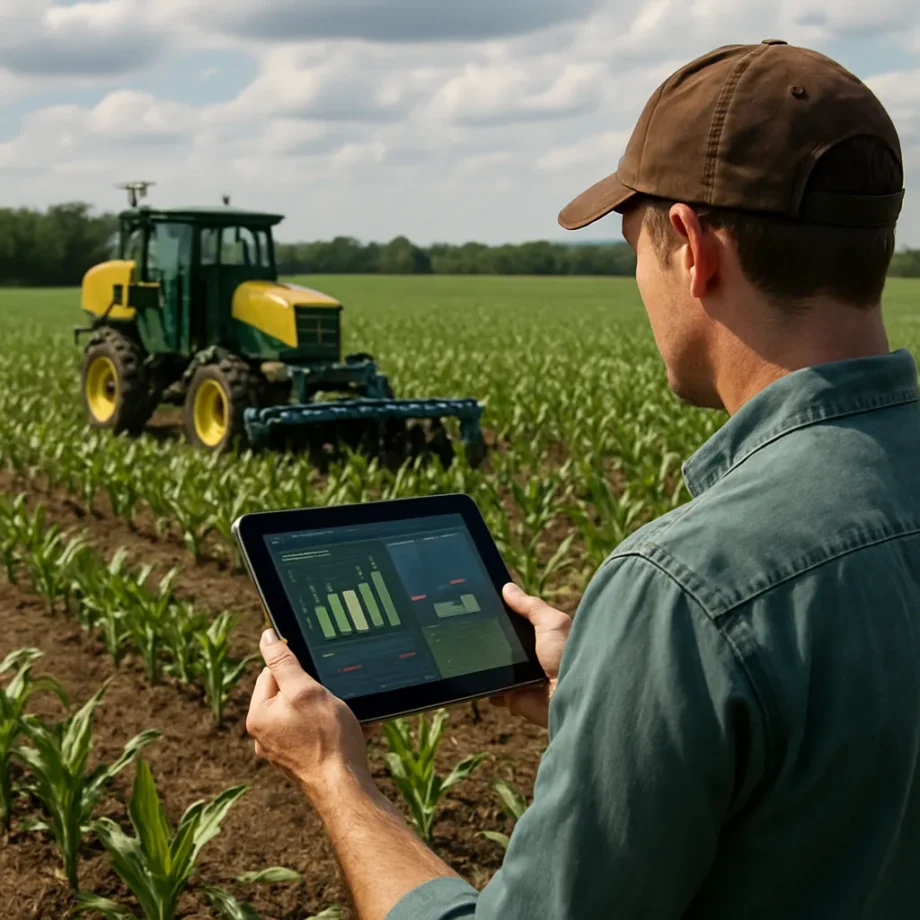
The integration of advanced technologies into modern farming practices has led to revolutionary changes in how fields are managed and crops are harvested. One notable development involves adapting equipment to the unique requirements of each crop species. This article explores the critical role of Machine Learning in optimizing crop-specific equipment adjustments, driving improvements in operational efficiency and sustainable outcomes.
Introduction to AI-Driven Equipment Adjustments
Agricultural operations have historically relied on manual calibration of machines, guided by farmer experience and generalized guidelines. However, as farm sizes grow and environmental conditions fluctuate, there is an increasing need for more dynamic and precise control systems. Data analytics powered by Machine Learning algorithms now enable equipment to autonomously adapt settings such as seeding depth, spraying rates, and harvesting speed for each specific crop type. These automation capabilities not only reduce human error but also boost overall farm performance.
Historical Context and Evolution
Early attempts at mechanization focused on replacing manual labor with standardized machines. While this reduced workforce demands, it did not account for the considerable variability among crop species, soil types, and weather patterns. The advent of GPS technology and satellite imaging marked the beginning of precision farming, offering spatial awareness of field conditions. Building upon this foundation, machine learning introduces real-time decision-making, drawing insights from vast datasets collected by modern sensors.
Fundamental Benefits
- Enhanced accuracy in equipment calibration
- Reduced resource wastage through targeted application
- Improved yield consistency across diverse field zones
- Minimized environmental impact and runoff
- Lower operational costs due to optimized settings
Key Technologies and Methods
Implementing automated adjustments demands a suite of interconnected technologies. This section delves into the core components that make crop-specific equipment tuning possible.
Sensors and Data Acquisition
Modern agricultural machinery is equipped with a variety of sensors that continually monitor situational variables. Sensors measure soil moisture, ambient temperature, nutrient levels, and plant health indicators such as chlorophyll concentration. These real-time inputs feed into machine learning pipelines to ensure equipment is calibrated for the precise conditions encountered.
Machine Learning Models
Various machine learning architectures contribute to equipment adjustment strategies:
- Supervised learning models trained on historical field performance data
- Unsupervised clustering algorithms that identify zones with similar characteristics
- Reinforcement learning systems that iteratively refine equipment actions based on outcome feedback
These models work in concert to predict optimal settings for aspects like seed rate per hectare or sprayer nozzle selection.
Edge Computing and Connectivity
Because agricultural sites often lack stable internet connectivity, edge computing devices are installed directly on tractors and harvesters. These on-board units execute trained models locally, ensuring real-time responsiveness. When connectivity is available, aggregated data is uploaded for further analysis and model retraining at central facilities.
Practical Applications in the Field
Translating theoretical advantages into tangible farm improvements requires careful integration and field testing. Below are examples demonstrating how machine learning-driven adjustments enhance various agricultural operations.
Variable-Rate Seeding
Implementing a variable-rate seeding strategy allows planters to deposit seeds at different densities within a single pass. Machine learning models assess soil fertility maps, historical yields, and real-time moisture readings to determine seeding density for each microzone. This approach increases uniformity in emergence and reduces seed waste.
Precision Spraying
General broadcast spraying often leads to overapplication and environmental runoff. By contrast, intelligent sprayers equipped with cameras and spectral sensors can detect weed presence and crop stage. Combined with a predictive algorithm, the sprayer modulates nozzle pressure and spray width, applying herbicides and fertilizers only where and when needed.
Adaptive Harvesting
Harvesting equipment benefits significantly from crop-specific adjustments. Grain moisture, kernel size, and plant height influence combine settings such as cylinder speed and fan airflow. Real-time sensor feedback feeds into a reinforcement learning agent, which adjusts combine parameters on the go, maximizing grain quality and minimizing losses.
Case Study: Corn vs. Soybean Rotation
In regions practicing annual rotation between corn and soybeans, machinery must frequently switch configurations. Machine learning-enabled control systems store crop profiles, enabling the harvester to transition seamlessly from one crop type to another with minimal downtime. Field trials report a 15% reduction in configuration time and up to 8% higher recovery rates.
Challenges and Future Directions
Despite promising results, certain obstacles still hinder widespread adoption of advanced adjustment systems.
Data Quality and Availability
High-quality, labeled datasets are essential for training reliable models. In many developing agricultural regions, data collection infrastructures are sparse. Efforts to democratize sensor affordability and establish open data repositories will be pivotal in overcoming this barrier.
Interoperability and Standardization
Varied equipment manufacturers often use proprietary communication protocols. Establishing industry-wide standards for data formats and control interfaces will simplify integration of machine learning modules across multiple machinery brands.
Scalability and Maintenance
Deploying edge devices at scale requires streamlined update mechanisms and robust hardware able to withstand harsh field conditions. Future research into low-power AI accelerators and self-diagnostic systems will enhance the reliability of on-board intelligence.
Emerging Trends
- Integration of drone-based aerial imaging with ground vehicle adjustments
- Use of deep learning for disease and pest detection in real time
- Blockchain-enabled traceability for equipment calibration records
- Collaborative robotics that coordinate multiple machines for complex tasks
By harnessing the power of Machine Learning, farmers can fine-tune their machinery to the nuanced demands of diverse crops, paving the way for more resilient and sustainable agricultural systems.