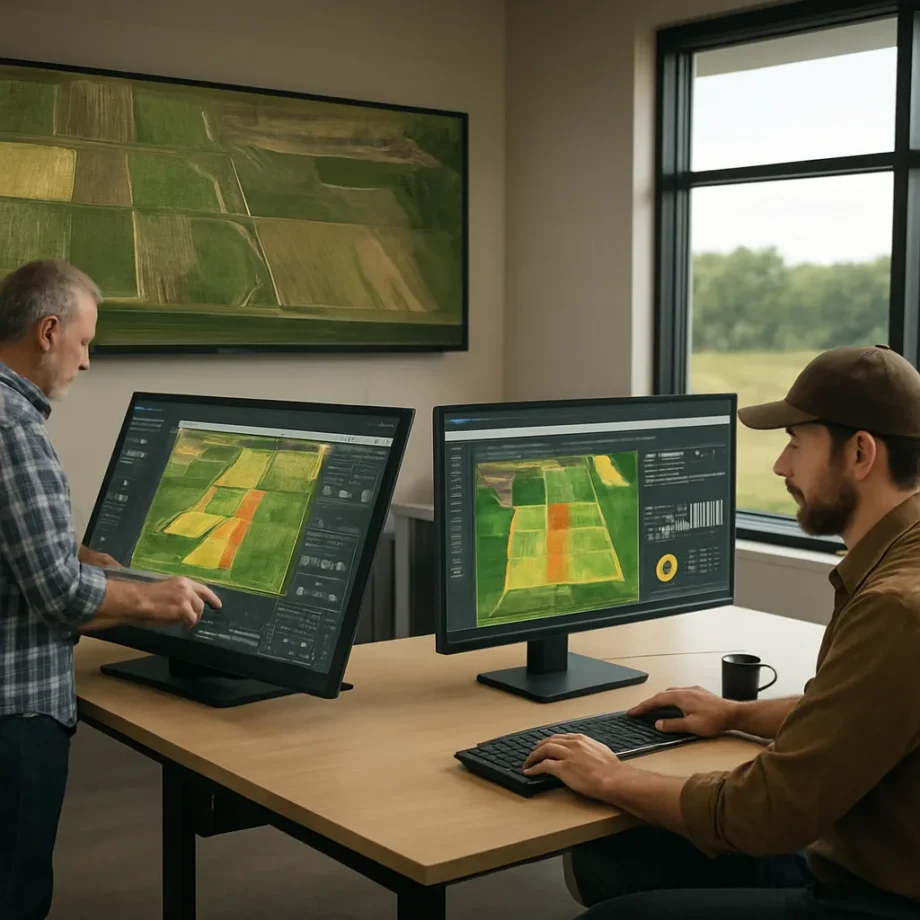
The integration of advanced technologies into farm operations has ushered in an era where real-time monitoring and remote control are no longer luxuries but essentials for maximizing yield, minimizing waste, and ensuring long-term sustainability. This article delves into the rapid evolution of digital command centers, explores the transformative impact of modern agricultural machinery, and highlights how data-driven insights are redefining decision-making on the field.
Digital Transformation in Farm Management
Across the globe, agricultural enterprises are embracing precision agriculture techniques to optimize resource utilization and boost overall productivity. At the heart of this shift lies the digital command centers, centralized platforms designed to consolidate data streams from various sources—tractors, harvesters, drones, weather stations, and soil sensors—into a unified dashboard. From this vantage point, farm managers can visualize field conditions, schedule tasks, and deploy equipment with unprecedented accuracy.
Unified Data Streams
- Real-time connectivity between machinery and cloud-based platforms
- Integration of satellite imagery and drone-collected aerial data
- Automated data ingestion from soil sensors and weather stations
Such integration not only accelerates decision-making but also empowers agronomists to detect anomalies—like water stress or pest infestations—before they escalate into costly problems.
Enhanced Machine Control
Modern digital command centers allow operators to assign tasks remotely, calibrate equipment, and even initiate maintenance protocols without physically visiting each machine. This level of automation reduces downtime and extends the lifespan of high-value assets by ensuring they operate within optimal parameters.
Key Components of Modern Agricultural Machinery
From autonomous tractors to robotic harvesters, today’s farm machinery represents a convergence of mechanical engineering, advanced electronics, and software intelligence. Below are the core components that make this synergy possible:
- Smart Actuators: Devices that translate digital commands into precise mechanical movements, enabling functions like variable-rate seeding or spot-spraying herbicides.
- Embedded IoT Modules: Internet-connected chips that continuously transmit performance metrics—fuel levels, engine health, tool wear—to the central dashboard.
- High-Resolution Cameras: Mounted on tractors and harvesters for real-time crop scouting, yield mapping, and obstacle detection.
- GNSS Receivers: Providing centimeter-level positioning accuracy to guide machinery along the most efficient paths, thus reducing soil compaction and overlap.
- Edge Analytics Units: On-board processors that sift through large volumes of sensor data and generate actionable insights in milliseconds, minimizing latency.
These components work in concert, transforming traditional implements into intelligent platforms capable of adapting to varying terrain, crop types, and environmental constraints.
Data-Driven Decision Making
While hardware forms the backbone of modern agricultural machinery, it is the strategic use of data that sets apart successful operations. Digital command centers collect and analyze a spectrum of variables—soil moisture, nutrient levels, weather forecasts, and machine performance—to deliver tailored recommendations.
Predictive Maintenance
By leveraging telematics data, farm managers can anticipate breakdowns before they occur. Algorithms monitor vibration signatures, temperature fluctuations, and oil analysis reports to predict component failures, ensuring that critical maintenance occurs on schedule without disrupting fieldwork.
Variable-Rate Application
Gone are the days of blanket fertilization and irrigation. Advanced mapping software, fed by soil sampling and yield history, enables site-specific management. Variable-rate technology (VRT) adjusts application rates on the go, conserving inputs while maintaining or improving crop performance.
Connectivity Challenges and Solutions
Reliable network coverage remains a hurdle in remote farming regions. However, several emerging solutions are closing the gap:
- Low-Power Wide-Area Networks (LPWAN): Technologies like LoRaWAN and NB-IoT deliver extended range for low-bandwidth sensor communication, ensuring even distant fields stay online.
- Satellite Broadband: High-throughput satellites now provide robust connectivity options where terrestrial infrastructure is scarce.
- Mesh Networks: Self-healing networks established among machinery and on-farm routers, creating resilient data pathways.
Combining these methods enhances the connectivity fabric, ensuring that every piece of equipment remains visible within the digital command center.
Enhancing Sustainability Through Smart Machinery
The push for sustainable agriculture is finding an ally in advanced machinery equipped with intelligent controls. By fine-tuning input usage, farmers can significantly reduce their environmental footprint:
- Precision Irrigation: Integrating soil moisture sensors with pump controls ensures water is applied only where needed.
- Eco-Friendly Tillage: Conservation tillage machines, guided by GPS, minimize soil disturbance and carbon release.
- Targeted Pest Management: AI-driven image recognition systems identify pests at an early stage, allowing for spot treatments instead of blanket pesticide applications.
These innovations not only conserve resources but also promote healthier soils and ecosystems, aligning with global sustainability goals.
Future Trends in Agricultural Machinery
As the sector continues to evolve, the next generation of machinery will likely incorporate:
- Swarm Robotics: Fleets of small, coordinated robots collaborating autonomously to plant, monitor, and harvest crops.
- Enhanced AI Capabilities: Deep-learning models capable of diagnosing crop diseases through spectral analysis on the fly.
- Blockchain Integration: Immutable records of field operations ensuring traceability from seed to shelf.
- Human–Machine Interfaces (HMI): Augmented reality glasses that overlay operational data directly onto the operator’s field of view.
These advancements promise to further elevate productivity while reinforcing the critical role of technology in modern agriculture.
Building a Resilient Farm Ecosystem
True resilience in agriculture stems from the harmonious integration of AI, robotics, data analytics, and robust machinery. A fully realized digital command center orchestrates these elements, empowering farmers to respond swiftly to climatic challenges, market shifts, and resource constraints. By investing in forward-looking equipment and connectivity strategies, agricultural operations can secure a competitive edge and foster a sustainable future for generations to come.