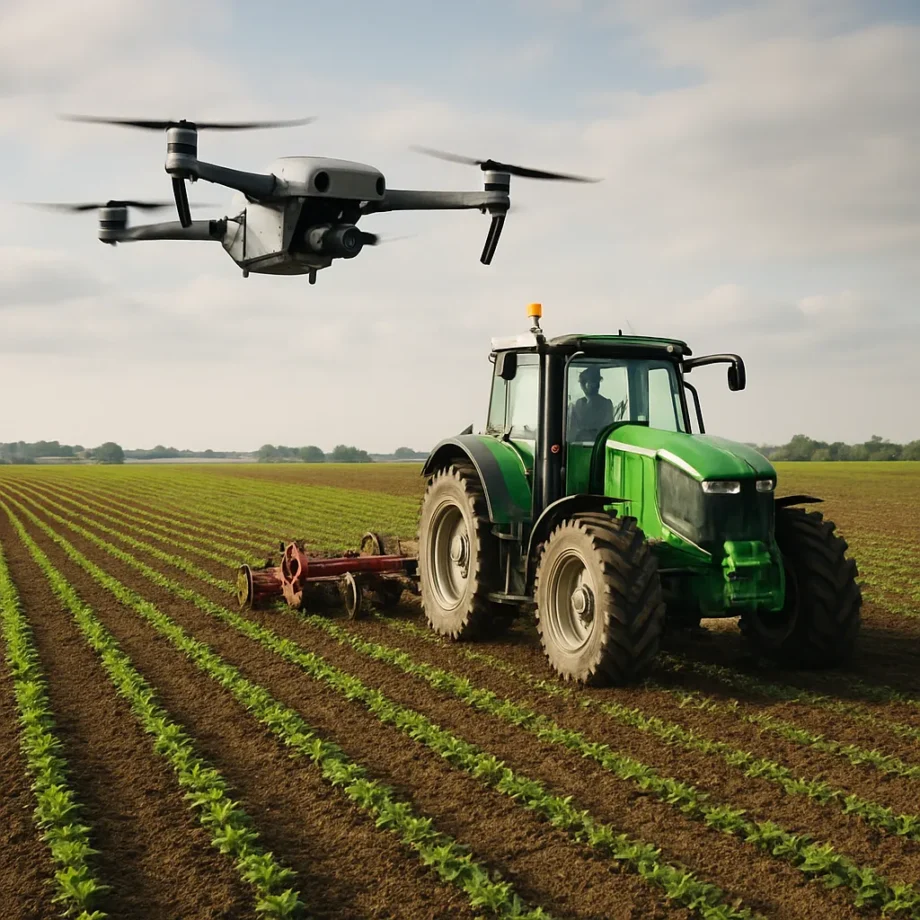
Precision agriculture has transformed the landscape of modern farming by integrating cutting-edge technologies into traditional practices. At the heart of this innovation lies the synergy between autonomous drones and smart tractors, which collectively enhance field management, crop monitoring, and resource optimization. By leveraging advanced sensors and real-time data analysis, farmers can achieve unprecedented levels of efficiency and sustainability, ultimately boosting yield while reducing environmental impact.
Autonomous Drones: Aerial Insight for Smarter Decisions
Equipped with multispectral cameras and LiDAR sensors, autonomous drones provide a comprehensive overview of large agricultural areas in a fraction of the time required by traditional methods. These unmanned aerial vehicles (UAVs) perform rapid survey flights, capturing high-resolution imagery to detect nutrient deficiencies, pest outbreaks, and soil moisture variations. Flight planning software allows drones to follow precise grid patterns or target-specific hotspots identified through previous data layers.
Key capabilities of agricultural drones include:
- Multispectral imaging for plant health assessment
- Real-time transmission of georeferenced data
- Automatic waypoint navigation via GPS
- Variable-rate application of agrochemicals through precision sprayers
By analyzing drone-collected data, farmers gain early warnings of stress factors, empowering them to take corrective measures before minor issues escalate into widespread losses. Such timely interventions can save water, fertilizers, and pesticides, leading to cost savings and reduced chemical runoff into surrounding ecosystems.
Smart Tractors: Ground-Level Precision and Power
Modern tractors are no longer mere vehicles for pulling plows; they have evolved into autonomy-ready platforms integrated with GPS guidance, auto-steering, and advanced telematics. These features allow tractors to operate with centimeter-level accuracy, optimizing row spacing and minimizing overlaps or gaps in field operations. Real-time kinematic (RTK) corrections ensure that each pass is perfectly aligned, conserving fuel and reducing unnecessary soil compaction.
Integrated Sensor Systems
Smart tractors carry a suite of onboard sensors, including:
- Yield monitors to measure harvested crop weight instantaneously
- Soil moisture probes to determine irrigation needs
- Machine vision cameras for obstacle detection
- Flow meters for precise fertilizer distribution
These sensors feed into a central data-driven platform, enabling operators or remote supervisors to track machine performance and field conditions in real time. Alerts can be generated if anomalies—such as underperforming cylinders or blockages—are detected, ensuring that equipment maintenance is proactive rather than reactive.
Seamless Collaboration Between Drones and Tractors
When drones and tractors operate in concert, their collective strengths magnify the benefits of precision farming. The collaboration follows a systematic workflow that begins with aerial reconnaissance and culminates in targeted ground interventions:
- Initial Data Acquisition: Drones scan fields to create vegetation indices maps, soil compaction profiles, and moisture distribution charts.
- Data Analysis and Prescription: Cloud-based platforms analyze aerial data and generate prescription maps that specify input rates (water, fertilizer, herbicide) for each zone.
- Autonomous Ground Execution: Smart tractors load prescription maps into their guidance systems and perform operations—such as variable-rate seeding or fertilization—exactly as planned.
- Feedback Loop: Post-operation drone flights validate application accuracy and effectiveness, updating the database for subsequent tasks.
This closed-loop system ensures continuous improvement. For instance, if a drone identifies areas where crop growth remains suboptimal after fertilization, the prescription algorithm adjusts input volumes or suggests alternative treatments. As more cycles are completed, the machine learning models powering these recommendations become increasingly accurate.
Enhancing Environmental and Economic Outcomes
By precisely targeting resource application, farmers significantly reduce waste and minimize runoff into waterways. Pesticide and fertilizer usage can drop by up to 30%, translating into both cost savings and environmental protection. Meanwhile, optimized irrigation schedules conserve valuable freshwater resources and mitigate the risk of waterlogging or salinity buildup.
From an economic standpoint, the return on investment (ROI) for integrating drone-tracked insights with autonomous machinery is compelling. Yield improvements of 10–20% are common, especially in heterogeneous fields where soil type and topography vary widely. Labor demands also decrease, as fewer manual inspections and fewer machine operators are needed.
Future Trends: AI, IoT and Beyond
The next frontier in agricultural machinery integration lies at the intersection of artificial intelligence (AI), Internet of Things (IoT), and edge computing. Emerging trends include:
- Edge Analytics: Processing sensor data directly on tractors or drone units for faster decision-making without relying solely on cloud connectivity.
- Swarm Robotics: Coordinated fleets of micro-drones or compact ground vehicles that collaborate to cover more terrain simultaneously.
- Predictive Maintenance: Machine learning models that predict component failures before they occur, reducing unexpected downtime.
- Digital Twins: Virtual replicas of farms and machinery that simulate scenarios, optimize workflows, and forecast yields based on weather patterns and market trends.
These innovations will further elevate the precision farming paradigm, enabling fully autonomous operations from planting to harvest. Real-time farm dashboards will integrate meteorological feeds, market prices, and supply chain logistics, allowing farmers to make holistic decisions that balance profitability and ecological stewardship.
Implementation Challenges and Recommendations
Despite the promise of cutting-edge machinery, widespread adoption faces certain hurdles:
- High initial capital expenditure required for drones and smart tractors
- Data interoperability issues among different manufacturers
- Connectivity limitations in remote rural areas
- Skills gap in operating and maintaining advanced equipment
To overcome these obstacles, stakeholders should consider:
- Establishing cooperative purchasing agreements to lower equipment costs
- Adopting open data standards for seamless integration
- Investing in rural broadband infrastructure
- Offering training programs and certification courses for operators
By addressing these critical factors, agricultural communities can accelerate the transition to fully integrated precision farming ecosystems that deliver robust economic and environmental dividends.
Conclusion: A New Era of Farm Management
The collaboration between autonomous drones and smart tractors exemplifies the transformative potential of innovation in agriculture. Through synergistic data collection, robust analysis, and meticulous ground execution, modern machinery empowers farmers to achieve unprecedented levels of productivity and resource stewardship. As AI-driven platforms, IoT connectivity, and advanced robotics continue to evolve, the future of farming promises to be more resilient, profitable, and environmentally conscious than ever before.