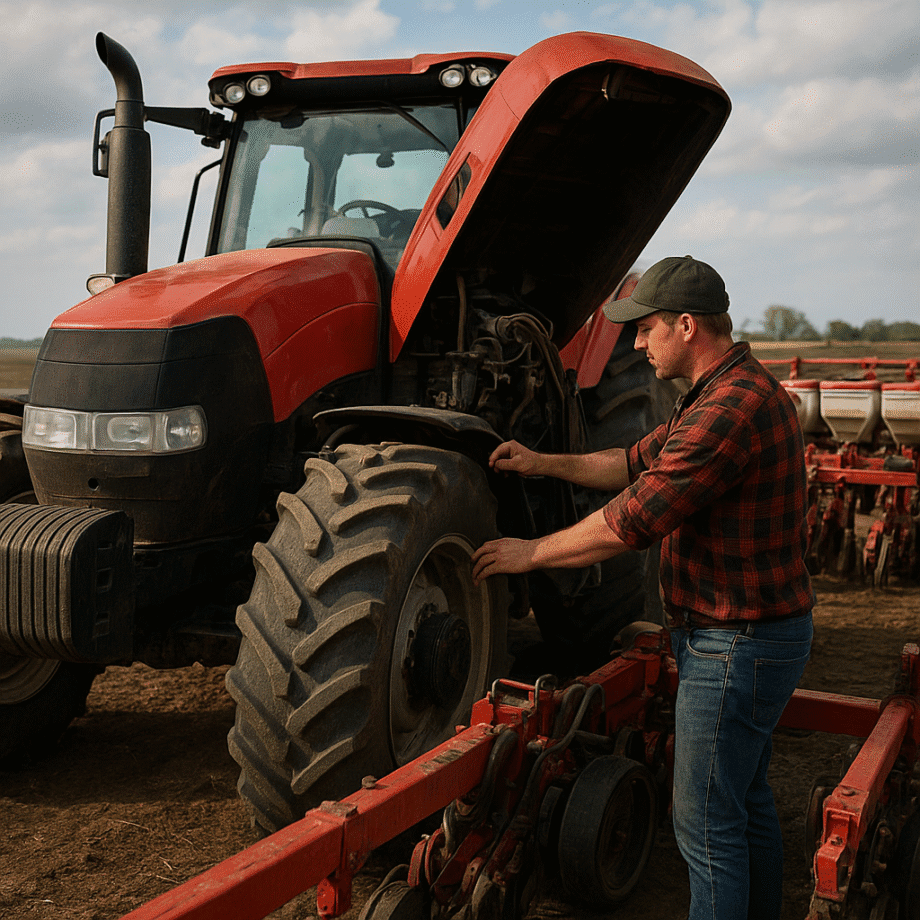
The success of your planting season begins long before the first seed touches the soil. Proper preparation and upkeep of modern farm machinery can dramatically increase efficiency, reduce downtime, and boost crop yields. This article explores essential steps to ensure your equipment is in peak condition, covering routine maintenance, precise adjustments, rigorous safety measures, and the integration of advanced technology.
Preseason Maintenance and Inspection
A thorough preseason check sets the foundation for trouble-free operation throughout the planting window. Whether you operate a fleet of heavy-duty tractors or versatile air seeders, dedicating time to preventive care pays dividends in reliability.
Visual and Mechanical Checks
- Conduct a walk-around to spot leaks, cracks, or worn hoses.
- Inspect belts, chains, and pulleys for proper tension and wear.
- Examine hydraulic lines for abrasions and secure all fittings.
- Verify tire pressure and tread condition on all implements.
- Check battery terminals and cables for corrosion and tightness.
Fluid Levels and Replacements
- Drain and replace engine oil, hydraulic fluid, and coolant according to manufacturer guidelines.
- Service fuel filters and water separators to prevent clogs.
- Top off gearboxes, final drives, and PTO reservoirs with the correct grade of fluid.
- Flush old coolant and fill with a long-life mixture to protect the engine block.
Regular lubrication points should be addressed using high-quality grease. Applying this lubricant at recommended intervals prolongs component life and enhances lubrication performance under heavy field loads.
Calibration, Settings, and Field Adjustments
After confirming mechanical soundness, the next step is accurate setup. Precise adjustments directly impact seed placement, fertilizer distribution, and overall yield uniformity.
Seeder and Planter Calibration
- Clean seed hoppers, removing any debris or residual seed coatings.
- Weigh seeds to determine bulk density and input data into the metering system.
- Perform test runs in a controlled area to measure actual seeding rates and spacing.
- Adjust downward forces, row unit stagger, and closing wheels for optimal seed-to-soil contact.
- Verify calibration settings for different seed types and variable-rate seeding prescriptions.
Fertilizer and Chemical Application
- Inspect nozzles and distribution manifolds for blockages or wear.
- Calibrate spreaders and sprayers, ensuring consistent output across the boom width.
- Set application rates according to soil test results and agronomic recommendations.
- Employ monitoring tools to track in-field variability and make real-time adjustments.
Completing these tasks enhances overall optimization of inputs, leading to reduced waste and improved crop performance.
Safety Protocols and Operator Training
Ensuring that operators are well-trained and machinery is equipped with essential safety features is non-negotiable. Accidents can lead to costly repairs, lost time, and potential injuries.
Personal Protective Equipment and Guidelines
- Provide operators with hearing protection, gloves, and eye safety gear.
- Establish clear procedures for lockout/tagout during maintenance tasks.
- Review machine-specific hazard zones, such as PTO shafts and hitch points.
- Maintain accessible first-aid kits and fire extinguishers in all equipment cabs.
Operator Skill Development
- Conduct classroom sessions on equipment operation, troubleshooting, and emergency shutdowns.
- Demonstrate proper hitching techniques and safe coupling of implements.
- Offer hands-on training for precision features, such as auto-steer systems and section controls.
- Encourage a culture of reporting near-misses to continuously improve safety protocols.
Prioritizing safety and knowledge-sharing reduces the risk of incidents and fosters a professional operational environment.
Advanced Technology Integration and Data Management
Modern farms rely on connectivity and data analysis to make informed decisions. Integrating precision ag tools can transform the way you plant, monitor, and manage fields.
GPS Guidance and Auto-Steer Systems
- Install RTK or satellite-based guidance modules for sub-inch accuracy.
- Map field boundaries and obstacle zones to optimize pass planning.
- Enable section control to eliminate overlap, conserve inputs, and reduce soil compaction.
Telematics and Remote Diagnostics
- Activate onboard sensors to track machine health parameters such as engine temperature, oil pressure, and hydraulic flow.
- Link telematics to a central dashboard for real-time alerts on service needs or fault codes.
- Use mobile apps to assign tasks, review work progress, and manage fleet logistics from any location.
Leveraging these innovations elevates operational transparency and monitoring, enabling proactive decisions that maximize uptime and resource allocation.
Routine Field Checks and Continuous Improvement
Maintaining a consistent review process throughout the planting season ensures that small issues are addressed before they escalate. Consider these ongoing practices:
Daily and Weekly Inspections
- Perform pre-start checks for fuel, fluids, and greasing points.
- Examine critical wear parts such as disks, blades, and bearings for signs of damage.
- Verify that sowing depth and fertilizer placement remain consistent across different soil conditions.
Post-Operation Reviews
- Analyze yield monitor data to identify uneven growth patterns.
- Adjust machine settings for subsequent passes based on field conditions and crop feedback.
- Document maintenance actions and schedule future service intervals.
Implementing a feedback loop focused on inspection and adaptation fosters a culture of excellence, ensuring each planting cycle benefits from accumulated insights.