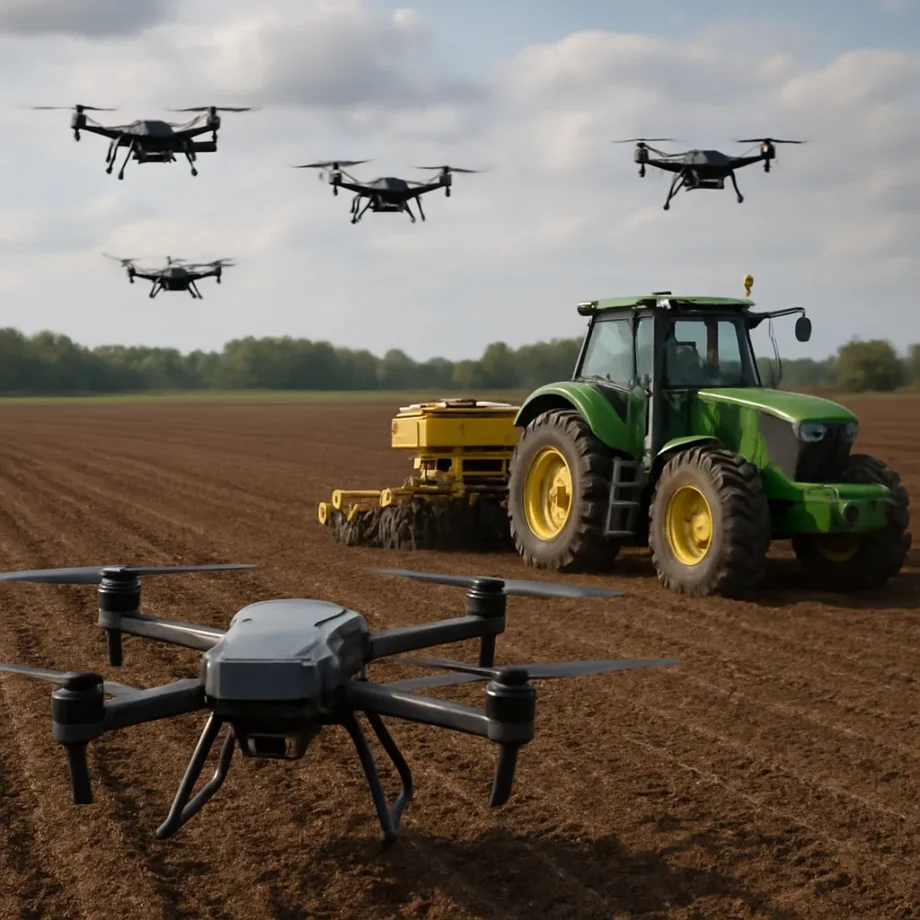
The relentless evolution of robotics and machine learning is reshaping modern agriculture. As farms grow in scale and complexity, the deployment of autonomous swarms of specialized vehicles promises unprecedented levels of efficiency and precision. By harnessing advanced sensors, cooperative algorithms, and robust connectivity, these intelligent fleets can manage complex tasks such as seeding and harvesting with minimal human intervention. This article explores the technological foundations, operational strategies, and upcoming challenges for next-generation agricultural machinery.
Technological Pillars of Autonomous Agricultural Machinery
Advanced Sensors and Perception Systems
Accurate environmental awareness is essential for effective field operations. Each unmanned unit is outfitted with a suite of sensors designed to detect soil conditions, crop health, and obstacles. Key components include:
- LiDAR scanners for high-resolution topography mapping
- Multispectral and hyperspectral cameras to assess plant stress and nutrient levels
- Ultrasonic and radar modules for real-time obstacle detection
- Soil moisture and temperature probes for optimal seeding depth and timing
By fusing data from these sources, onboard processors build a detailed, dynamic understanding of field conditions. This data-driven awareness underpins all subsequent decision-making.
Artificial Intelligence and Machine Learning
Cooperative robotics relies on artificial intelligence to interpret sensory inputs, predict outcomes, and adapt to shifting parameters. Key AI-driven capabilities include:
- Convolutional Neural Networks (CNNs) for automatic plant classification and yield estimation
- Reinforcement learning frameworks that optimize vehicle trajectories and tool deployment
- Predictive analytics models that forecast weather impacts and soil variability
Continuous learning loops allow machinery to refine performance over multiple seasons. The combination of edge computing and cloud-based platforms ensures that the latest algorithms can be distributed to the entire fleet rapidly and securely.
Connectivity and Data Management
A reliable communication backbone is crucial for maintaining synchronized operations. Modern systems leverage:
- Low-latency 5G networks for real-time coordination
- Mesh networking protocols to preserve connectivity in remote areas
- Secure cloud repositories for storing and analyzing terabytes of operational data
Effective data management not only supports live decision-making but also drives long-term insights into crop yields, resource utilization, and equipment health. This continuous feedback loop elevates operational sustainability and drives cost savings.
Operational Strategies for Seeding and Planting
Swarm Coordination Algorithms
Deploying dozens or even hundreds of small, agile units demands sophisticated coordination. Swarm intelligence, inspired by social insects, enables vehicles to make local decisions while aligning with the global mission. Core principles include:
- Decentralized decision-making to reduce single points of failure
- Behavioral rules—such as flocking, aggregation, and task allocation—to adapt to dynamic changes
- Real-time reallocation of roles when individual units encounter mechanical issues or obstacles
By mimicking natural systems, these algorithms ensure high scalability and resilience across sprawling fields.
Precision Seeding Techniques
Precision seeding is a critical first step in achieving uniform crop stands and maximizing yield potential. Autonomous seeding vehicles employ:
- Variable-rate technology to distribute seeds based on soil fertility maps
- High-accuracy GPS guidance for consistent row spacing
- Depth control actuators that adjust planting depth in seconds
When integrated into a collaborative swarm, each unit can cover multiple field segments simultaneously. This parallel operation reduces seeding time dramatically, enabling planting within narrow weather windows.
Adaptation to Field Variability
Fields rarely exhibit uniform conditions. Slopes, soil composition, moisture gradients, and residual biomass from cover crops all influence seeding effectiveness. Adaptive swarms leverage:
- On-the-fly adjustments to seeding rates based on in-situ soil tests
- Route planning that avoids compacted zones or waterlogged areas
- Real-time yield prediction to dynamically shift resources where they are needed most
Such adaptability ensures that even the most complex fields are seeded with optimal resource allocation, minimizing waste and environmental impact.
Efficient Harvesting with Collaborative Robots
Navigation and Path Planning
During harvest, timing and precision are paramount to preserve crop quality and minimize losses. Autonomous harvesters use:
- SLAM (Simultaneous Localization and Mapping) to navigate dense canopies
- Obstacle avoidance routines that detect human workers, wildlife, and equipment
- Dynamic route recalculations to maintain optimal throughput when encountering bottlenecks
By coordinating multiple harvesters in a grid or linear formation, swarms can cover extensive acres in record time while avoiding overlaps or missed zones.
Crop Handling and Quality Control
Post-cutting processes—such as threshing, sorting, and cleaning—exert a significant influence on end-product quality. Advanced harvesters integrate:
- Vision systems that grade grain or fruit by size and color
- Automated conveyors that channel produce directly into transport modules
- In-line moisture sensors that trigger drying protocols if necessary
These features ensure that harvested goods meet market standards and reduce losses from overharvesting or mechanical damage.
Energy Management and Sustainability
As fleets expand, power consumption and carbon footprints become major considerations. Sustainable designs include:
- Modular battery packs with hot-swappable capabilities
- Hybrid powertrains that combine solar charging with biofuel generators
- Regenerative braking systems that harvest energy during maneuvers
Smart energy management not only lowers operational costs but also aligns with global goals for environmental stewardship.
Challenges and Future Directions
Regulatory and Safety Considerations
Deploying unmanned fleets across public and private lands raises important safety and compliance issues. Policymakers and manufacturers must collaborate on:
- Standardizing communication protocols and fail-safe mechanisms
- Certifying autonomous systems to international safety benchmarks
- Defining liability frameworks in the event of accidents
Clear regulations will accelerate adoption by building trust among farmers, insurers, and consumers.
Integration with Farm Management Systems
To unlock maximum value, autonomous swarms must seamlessly interface with existing Farm Management Information Systems (FMIS). Critical integrations cover:
- Real-time dashboards displaying machine status, field metrics, and logistics
- Automated procurement triggers when seed or fertilizer stocks drop below thresholds
- Analytical modules forecasting equipment maintenance and part replacement
Unified platforms create a holistic view of farm operations and enable data-driven growth strategies.
Economic Impacts and Workforce Transformation
The transition to machine-driven agriculture promises to enhance productivity and reduce labor shortages. However, it also demands workforce upskilling. Key considerations:
- Training programs for operators, data analysts, and maintenance technicians
- Job redesign to emphasize system supervision, data interpretation, and strategic planning
- New business models—such as machinery-as-a-service—to lower entry barriers for small and midsize farms
By fostering a skilled workforce and flexible service offerings, the sector can ensure that technological gains benefit all stakeholders equitably.