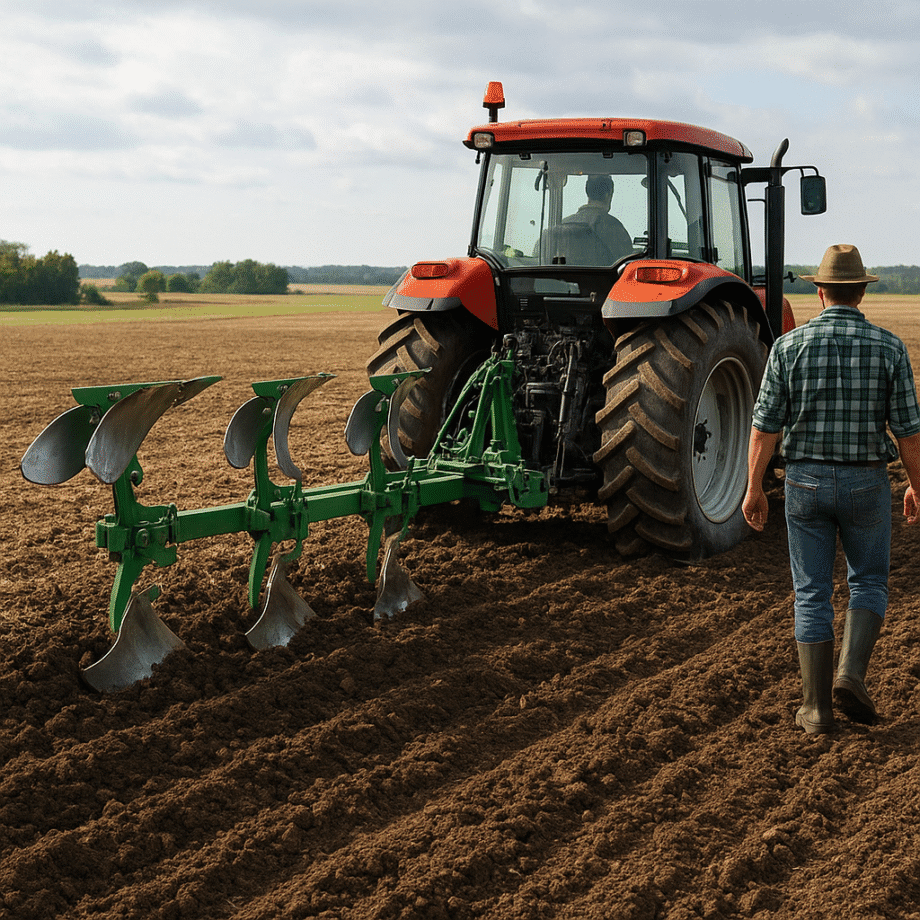
Selecting the perfect plough for your farm is more than just a one-size-fits-all decision. Each field presents a unique combination of soil composition, moisture levels, and contour that directly influences your choice of implement. By understanding the nuances of different soil types and matching them with the right plough features, you’ll maximize your crop yield, minimize your fuel consumption, and extend the life of your equipment.
Understanding Soil Types and Their Impact
Soils vary dramatically in texture and structure, and the classification largely dictates how a plough will perform. Three main categories—sandy, clayey, and loamy soils—each present distinct challenges:
- Sandy soils drain quickly, require lighter equipment for minimal compaction, and benefit from shallow ploughing to preserve moisture.
- Clayey soils are heavy and compact, need robust frames to resist twisting forces, and deeper furrow inversion to prevent crusting.
- Loamy soils offer ideal conditions for most crops, requiring balanced settings and moderate depth adjustments for consistent seedbed preparation.
The mineral content and organic matter percentage influence the plough’s wear rate. High sand or grit content accelerates wear on mouldboards and shares, whereas high organic soils can gum up the blades without the right surface finish.
Key Plough Features to Consider
Selecting a plough involves scrutinizing specific design elements that govern performance under varying field conditions:
Number of Furrows
The count determines your tractor’s capacity to handle draft. More furrows increase productivity but also raise draft requirements. Smaller tractors may be limited to two or three-furrow models, whereas larger units can manage five or six.
Frame Construction
High-tensile steel frames improve durability and resist bending. Look for reinforced cross beams and gusset plates. In clay-rich environments, a rigid frame reduces stress and prevents misalignment under heavy loads.
Share and Mouldboard Design
Innovations in share geometry and mouldboard curvature directly affect inversion quality. Narrow shares reduce soil disturbance, ideal for conservation tillage, whereas wide shares maximize weed burying in primary tillage operations.
Hydraulic vs. Mechanical Adjustment
Hydraulic systems offer on-the-go changes in depth and angle, boosting field efficiency. Mechanical systems are simpler and less costly but require stops for manual tweaks. Choose based on the frequency of terrain variation across your acreage.
Matching Ploughs to Tractor and Field Conditions
A successful pairing between tractor and plough optimizes fuel consumption and reduces downtime. Key compatibility factors include:
- Tractor horsepower rating relative to the plough’s recommended traction force.
- Hydraulic flow rate and coupling compatibility for seamless adjustments.
- Three-point linkage category to ensure secure attachment and proper weight distribution.
Before purchasing, inspect your fields for rocks, stumps, or heavy residue from previous crops. In high-debris zones, consider reversible or semi-mounted ploughs equipped with safety trip mechanisms that protect the frame when an obstruction is hit.
Soil Moisture and Timing
Timing your ploughing is critical. Too wet and you’ll cause compaction layers; too dry and you’ll struggle to achieve proper furrow penetration. Invest in a simple soil moisture meter to determine the ideal window. Aim for about 60-65% of field capacity in clay soils, slightly lower in sandy types.
Maintenance Practices for Longevity
Regular care extends the lifespan of your plough and reduces long-term costs. Implementing a structured maintenance regime helps you avoid unexpected breakdowns:
- Inspect shares and mouldboards for signs of excessive wear. Replace or resharpen before performance declines.
- Grease all pivot points, bearings, and hydraulic cylinders after every 25 operating hours to prevent corrosion and jamming.
- Check frame bolts and mounting hardware to ensure nothing has loosened under stress. Torque them according to manufacturer specifications.
- Wash off clay and organic residues immediately after use to avoid pitting and rust formation on steel surfaces.
Record field-specific notes—such as plough depth settings, draft force readings, and fuel consumption—so you can refine your approach in subsequent seasons. This data-driven strategy enhances efficiency and helps forecast component replacement schedules.
Optimizing Field Performance
Beyond equipment selection, fine-tuning your operations ensures every pass maximizes soil health and productivity:
- Alternate ploughing direction every season to minimize soil compaction and promote uniform residue distribution.
- Implement cover crops post-ploughing to protect bare soil, boost organic matter, and suppress weeds naturally.
- Use GPS-guided auto-steering to reduce overlap and optimize field coverage with consistent ploughing lines.
- Combine ploughing with subsoiling in one pass if deep compaction layers are present, saving time and reducing tractor wear.
By addressing both the mechanical attributes of your plough and your agronomic practices, you’ll foster healthier soil structure, leading to stronger root systems and increased yields.