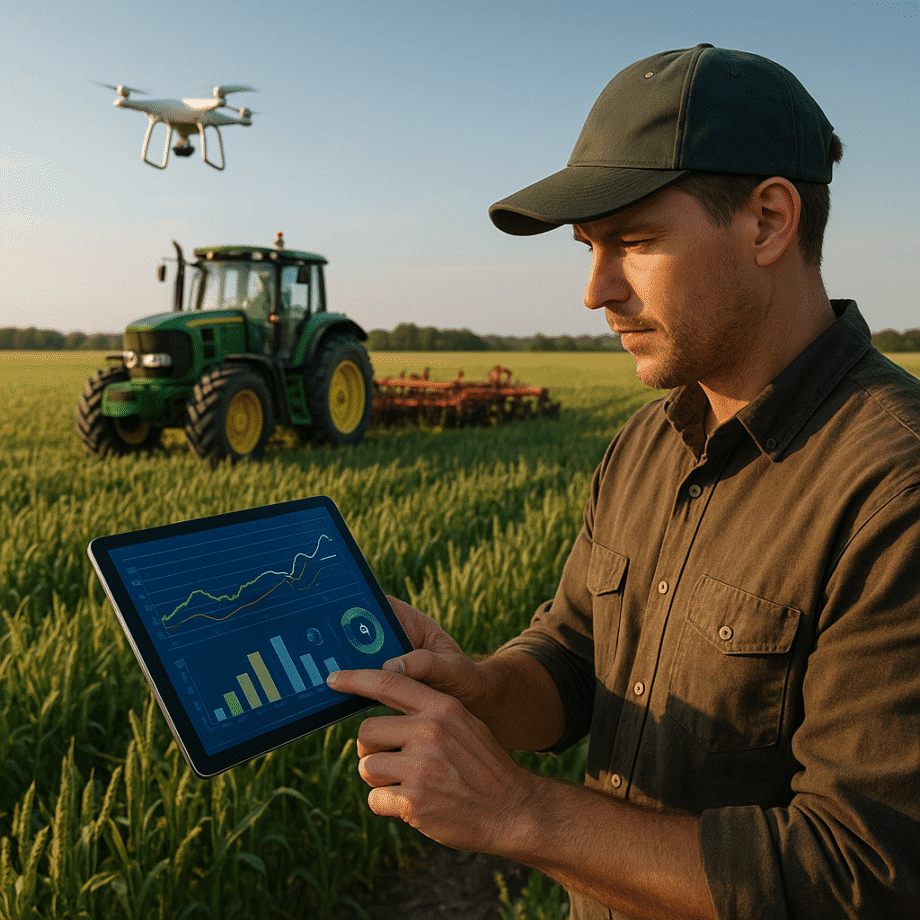
Modern farm operations are transforming thanks to the integration of advanced telemetry systems into agricultural machinery. From tractors and combines to sprayers and planters, the ability to collect, transmit, and analyze data in real time has become a cornerstone of efficient and sustainable food production. This article explores how telemetry is reshaping the agricultural landscape by enhancing productivity, reducing costs, and supporting environmentally responsible practices.
Advancements in Telemetry Hardware for Agricultural Machinery
The foundation of any telemetry solution lies in robust sensors and reliable communication modules. Recent years have witnessed significant improvements in both the durability and accuracy of hardware components designed to operate under harsh farm conditions.
Sensor Technologies
- Multispectral and hyperspectral sensors: Used for crop health monitoring, these devices detect wavelengths beyond the visible spectrum to identify nutrient deficiencies and disease outbreaks.
- Soil moisture probes: Installed at multiple depths, they provide real-time soil water content readings, guiding irrigation decisions and optimizing water usage.
- Engine performance sensors: Track fuel consumption, oil pressure, and temperature, enabling predictive maintenance to reduce downtime and repair costs.
Communication Protocols
Effective telemetry relies on wireless and wired protocols that ensure seamless data exchange between field equipment and central servers.
- Cellular IoT (e.g., LTE-M, NB-IoT): Offers broad coverage and low power usage, ideal for remote fields.
- Satellite connectivity: Provides uninterrupted service in areas without terrestrial networks, supporting critical operations like pesticide application tracking.
- Short-range technologies (LoRaWAN, Zigbee): Enable machine-to-machine communication for cluster-based monitoring of implements and trailers.
Integration of Telemetry Data into Farm Management
Collecting data is only the first step; the true value emerges when raw information is processed into actionable insights through sophisticated data analytics platforms.
Real-Time Monitoring and Alerts
- Geofencing boundaries: Notify managers when machinery exits designated areas, enhancing security and reducing theft.
- Engine fault alerts: Instant notifications of anomalies help operators address issues before they escalate into major breakdowns.
- Weather-based triggers: Automatic adjustments to seeding or spraying operations based on rainfall forecasts and wind speed data.
Predictive Maintenance
By leveraging historical performance logs and machine-learning algorithms, farmers can predict mechanical failures with high accuracy. This approach shifts maintenance from reactive to proactive, ensuring that critical components are serviced before they fail.
Resource Optimization
- Precision seeding: Variable-rate control systems adjust seed rates on the go, based on soil fertility maps and yield predictions.
- Variable-rate fertilization: Reduces chemical use by applying nutrients exactly where needed, improving profitability and minimizing runoff.
- Automated irrigation scheduling: Integrates weather stations, soil moisture data, and crop evapotranspiration models for optimized water usage.
Impact on Precision Agriculture and Sustainability
Telemetry-driven operations have become synonymous with precision agriculture, a methodology that aims to match inputs with specific field conditions, thereby maximizing yields while minimizing environmental impact.
Variable-Rate Application Techniques
- Seed placement: High-resolution soil maps guide on-the-fly adjustments in seeding depth and spacing.
- Sprayer boom control: Sectional shutoff based on GPS position prevents overlaps and chemical overuse.
- Top-dressing and side-dressing: Nutrient applications tailored to crop growth stages, reducing leaching and greenhouse gas emissions.
Environmental Benefits
Integrating telemetry into farm machinery promotes sustainable practices:
- Reduced fuel consumption through optimized route planning and real-time speed adjustments.
- Lower greenhouse gas emissions by fine-tuning engine performance and minimizing idling time.
- Improved soil health due to precise traffic management and minimization of compaction zones.
Future Trends and Innovations
The synergy between telemetry and emerging technologies promises to elevate farm efficiency even further. Key developments are already taking shape in research labs and pilot projects around the globe.
Artificial Intelligence and Machine Learning
AI-driven platforms can analyze multi-source telemetry streams to predict crop stress, optimize harvest schedules, and recommend customized management practices. Machine learning models trained on historical yield data continue to refine their accuracy as more information is gathered.
Autonomous Vehicles and Robotics
- Driverless tractors: Equipped with lidar, radar, and computer vision, these machines navigate fields autonomously, performing tillage, planting, and spraying tasks without human intervention.
- Swarm robotics: Fleets of small robots collaborate to execute labor-intensive tasks such as weeding and fruit picking, guided by telemetry-enabled coordination protocols.
- Drone integration: Aerial platforms provide high-altitude telemetry, conducting rapid field scans for pest detection, plant counting, and biomass estimation.
Blockchain and Data Security
As telemetry systems expand, so does the need for secure data handling. Blockchain-based solutions are being tested to create immutable ledgers of machinery performance, input usage, and harvest records, ensuring transparency and traceability throughout the supply chain.
The Role of Connectivity in Scaling Telemetry Solutions
A reliable network architecture is essential to fully leverage telemetry’s potential. Next-generation connectivity solutions are emerging to support high-bandwidth, low-latency applications and enable seamless data flow.
- 5G networks: Offer ultra-low latency and high throughput, facilitating real-time video feeds from equipment-mounted cameras and edge computing for on-site data processing.
- Edge computing devices: Process sensor data locally to reduce backhaul requirements, delivering faster decision loops and improved cybersecurity.
- Network redundancy: Hybrid setups combining cellular, satellite, and local mesh networks ensure uninterrupted communication even in remote areas.
Economic and Social Implications
Beyond technical gains, telemetry-driven machinery is altering the economic landscape of agriculture and influencing rural communities.
- Cost savings: Lower input usage and reduced maintenance expenses improve bottom-line performance for farmers of all scales.
- Labor dynamics: Automation and remote monitoring can alleviate labor shortages by enabling one operator to manage multiple pieces of equipment simultaneously.
- Knowledge transfer: Telemetry platforms often include collaborative features, allowing agronomists, machine dealers, and farm managers to share insights and best practices.
Adoption Challenges and Best Practices
While the benefits of telemetry are clear, successful implementation requires careful planning and investment in both technology and training.
- Interoperability standards: Ensuring compatibility between machinery from different manufacturers to avoid data silos.
- Data literacy: Providing operators and farm managers with the skills to interpret dashboards, alerts, and reports effectively.
- Scalable infrastructure: Starting with pilot projects and gradually expanding telemetry coverage to balance costs and ROI.