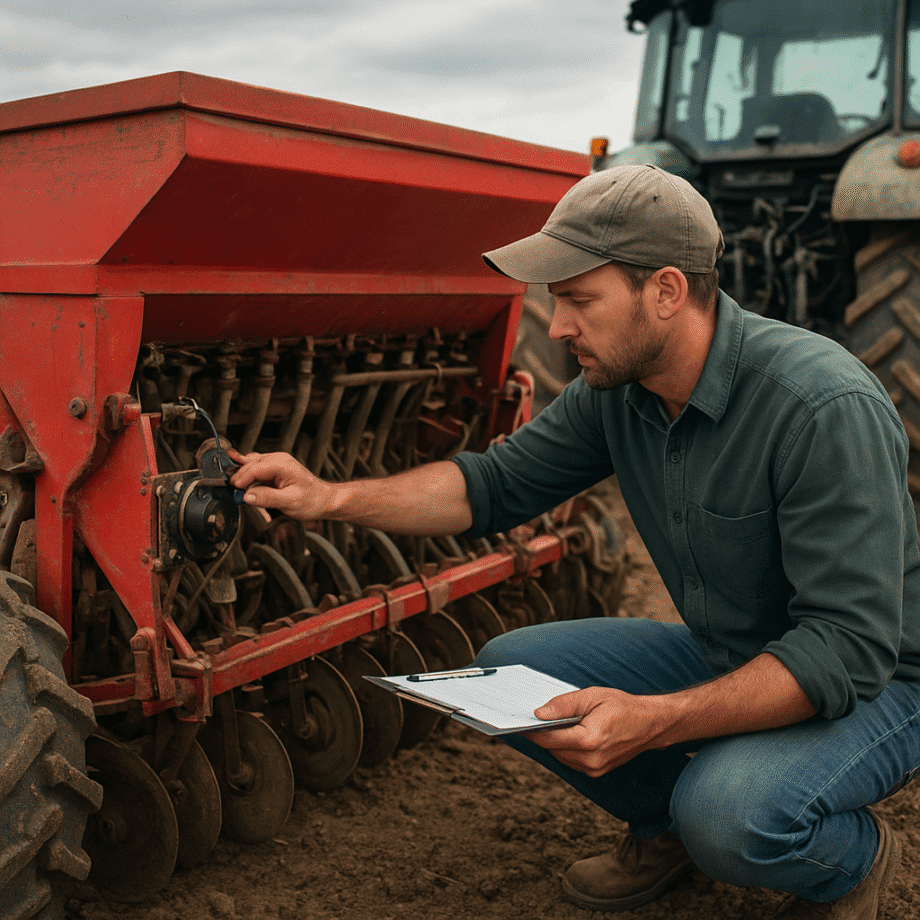
Effective farming relies on the seamless integration of advanced machinery, skilled operators, and meticulous attention to detail. Among the various implements that contribute to a successful season, the seed drill stands out as a crucial component in achieving uniform crop emergence and maximizing yield. Without the right adjustments and regular upkeep, even the most sophisticated equipment can underperform, leading to wasted inputs and inconsistent results. This article explores the world of agricultural machinery with a focus on the importance of proper calibration for seed drills, offering insights into technology, best practices, and practical steps to boost overall efficiency.
Modern Agricultural Machinery Overview
The landscape of contemporary farming is shaped by a variety of implements designed to handle every phase of crop production. From soil preparation to harvest, each machine brings distinct advantages:
- Tractors: The versatile workhorses that power ploughs, cultivators, and trailers. Their horsepower and torque capacity determine the range of attachments they can operate.
- Ploughs and Disc Harrows: Equipment for primary tillage that breaks up compacted soil, improves water infiltration, and controls weeds.
- Seed Drills: Precision planters that deposit seeds at a consistent depth and spacing, ensuring uniform emergence.
- Sprayers: Devices for applying fertilizers, herbicides, and pesticides with pinpoint accuracy to reduce waste and environmental impact.
- Harvesters: Combine machines that integrate reaping, threshing, and winnowing in one pass, dramatically decreasing harvest time.
Each piece of machinery demands regular maintenance schedules and occasional part replacements. Neglecting the upkeep of any implement can escalate operational costs, compromise plant health, and diminish the farm’s bottom line. Among these tools, the seed drill plays a pivotal role in determining the uniformity of planting—directly influencing crop vigor and yield potential.
Proper Calibration for Seed Drills: Key to Optimal Planting
Calibration of a seed drill refers to the process of adjusting its settings to deliver the desired seeding rate and depth. Achieving accurate calibration is critical for several reasons:
- Uniformity: Even seed spacing prevents overcrowding and allows each plant to access sufficient nutrients, water, and sunlight.
- Yield Maximization: Correct seed placement reduces gaps, ensures complete field coverage, and optimizes final harvest weight.
- Cost Control: Over- or under-seeding can waste expensive seed varieties or leave parts of the field unproductive.
- Resource Sustainability: Precise calibration lowers the use of water and fertilizers per unit yield by minimizing competition among plants.
Without proper adjustments, a seed drill might deposit seeds too shallowly—leading to poor soil contact and erratic germination—or too deeply, causing delayed emergence or seed mortality. Environmental factors like soil moisture, texture, and temperature also influence depth settings, making regular checks indispensable.
Steps to Achieve Accurate Calibration
Follow this systematic procedure to ensure your seed drill operates at peak performance:
- Verify Manufacturer Specifications
- Consult the operator’s manual to determine the recommended seeding rate (e.g., seeds per hectare) and depth range.
- Note the settings for different seed types; legumes, small grains, and oilseeds often require unique configurations.
- Prepare the Drill
- Clean the hopper, metering mechanism, and seed tubes to remove debris and residual seed.
- Inspect wear components such as discs, coulters, and bearings for signs of erosion or damage.
- Conduct a Dry Test
- Place a calibrated collection container underneath the discharge tubes.
- Rotate the seed-metering unit over a fixed number of revolutions to estimate the volume or count of seeds delivered.
- Compare measurements against target values and adjust the seed plate setting, drive ratio, or opener depth as needed.
- Perform a Wet Test (Optional)
- Fill the hopper with water or inert pellets to simulate actual flow without wasting seed.
- Monitor distribution consistency across multiple outlets to identify blockages.
- Field Verification
- Mark out a known-distance strip (e.g., 10 meters) in representative field conditions.
- Pass the drill over this strip at operational speed and count emerging seedlings after germination.
- Adjust until actual plant population aligns with theoretical seeding rate.
- Document Settings
- Record the final calibration parameters—seed rate, depth, opener type, gear ratio—or attach a durable label to the drill for quick reference.
- Maintain a logbook to track seasonal changes, varietal adjustments, and any subsequent deviations.
This rigorous approach ensures that seed distribution remains consistent from the first meter to the last, minimizing variability across the entire field.
Technological Advances in Calibration Tools
As precision agriculture evolves, manufacturers incorporate cutting-edge features to simplify calibration and enhance data-driven decision-making:
- Electronic Monitoring Systems: Real-time sensors measure seed flow rate, blockages, and machine speed, displaying instant feedback on a tractor-mounted console.
- GPS-Enabled Auto Section Control: This technology switches individual drill sections on or off at headlands or overlapping passes, reducing over-seeding and minimizing input costs.
- Variable-Rate Seeding (VRS): By integrating yield maps and soil zone data, VRS adjusts seeding density on-the-go, placing more seeds in high-fertility zones and fewer in low-potential areas.
- Mobile Diagnostic Apps: Bluetooth-connected devices guide operators through calibration steps, store historical data, and provide troubleshooting tips based on model-specific parameters.
Implementing these tools can significantly enhance operational productivity, particularly on large-scale farms where diverse soil types and topographies demand flexible seeding strategies.
Conclusion
Effective calibration of seed drills represents an intersection of craftsmanship, agricultural science, and technology. By dedicating time to precise adjustments, regular inspections, and adopting modern monitoring systems, farmers can safeguard against common pitfalls such as uneven stands, wasted seed, and lower-than-expected harvests. In the broader context of agricultural machinery, every implement benefits from meticulous setup and ongoing maintenance—securing both short-term gains and long-term sustainability for the farm enterprise.