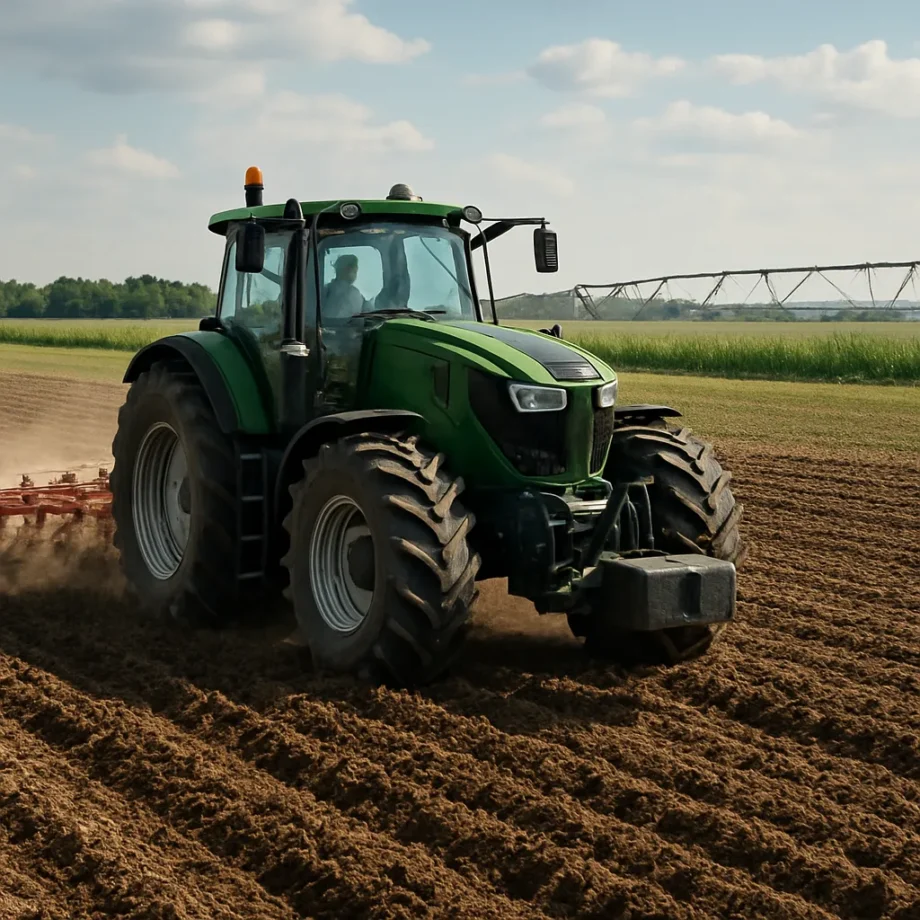
Agriculture is transforming faster than at any other time in history, driven by technology, data, and smarter field practices. At the center of this transformation is a new generation of **essential** machinery that shapes how we prepare soil, plant, fertilize, irrigate, protect crops, and harvest. From compact tractors serving small family farms to autonomous harvesters working through the night, today’s equipment is no longer just metal and hydraulics; it is an integrated system powered by sensors, algorithms, and connectivity. For farmers looking to remain competitive and sustainable, staying informed about the latest agricultural machinery insights is not optional but strategic. Understanding how each machine adds value, how it fits within a broader production system, and how it can be adapted to local conditions is now as important as agronomy itself.
The Strategic Role of Modern Tractors
Tractors remain the backbone of mechanized farming, but their role has expanded dramatically. Today’s tractors are multifunctional power units that support a wide range of implements, from tillage tools to precision planters and sprayers. Key developments include improved fuel efficiency, better ergonomics for operators, and advanced hydraulic and power take-off systems that can handle more demanding implements.
Modern tractors increasingly integrate GPS guidance, telematics, and semi-autonomous steering. This allows farmers to reduce overlaps in field operations, optimize fuel use, and work accurately even in low visibility. The combination of high-horsepower models for large-scale operations and compact tractors for orchards, vineyards, and small fields helps match machinery to the specific needs of each farm. The tractor is no longer just a workhorse; it is a mobile platform for **precision** agriculture technology.
Soil Preparation and Conservation Tillage Equipment
Efficient soil preparation is crucial for crop establishment and long-term soil health. Traditional ploughs, harrows, and cultivators are now complemented by reduced-tillage and no-till equipment. Conservation tillage machines minimize soil disturbance, maintain surface residues, and reduce erosion while saving fuel and labor.
Rippers, chisel ploughs, and subsoilers break compaction layers to improve root development and water infiltration without fully inverting the soil profile. Strip-till equipment works narrow bands of soil where seeds will be placed, leaving the rest of the field covered with residues. This not only conserves moisture but also supports soil biodiversity and carbon sequestration. The shift from heavy inversion tillage to targeted soil management is a fundamental step toward more **sustainable** production systems.
Seeders and Precision Planters Driving Yield Potential
Planting is one of the most yield-sensitive operations in crop production. Modern seed drills and planters focus on accurate seed placement, uniform depth, and consistent spacing. Pneumatic seed metering systems, adjustable downforce, and row-by-row control enable farmers to tailor seeding density and depth to soil conditions and crop type.
Precision planters equipped with GPS and variable-rate technology can automatically adjust seeding rates within a field based on soil maps or yield data. This optimizes plant population in each zone, supporting both productivity and input efficiency. For smallholders and specialty crops, compact seeders and transplanting machines help standardize planting quality while reducing manual labor. In all cases, the link between planting **accuracy** and long-term profitability is becoming more widely recognized.
Fertilizer Application and Nutrient Management Machinery
Efficient nutrient management is essential for high yields and environmental protection. Fertilizer spreaders, slurry tankers, and liquid fertilizer applicators have evolved to deliver nutrients more uniformly and precisely. Modern spreaders with electronic control can adjust application rates on the move and compensate for variations in forward speed and terrain.
Variable-rate technology allows nutrients to be applied only where needed and in the correct quantities. By integrating yield maps, soil tests, and sensor data, machines can distribute fertilizers in a way that reduces waste, lowers input costs, and limits nutrient runoff. Band application and injection equipment place nutrients closer to the root zone, increasing uptake efficiency. In livestock-based systems, advanced slurry and manure applicators transform organic by-products into valuable **resources** rather than environmental burdens.
Irrigation Systems and Water-Efficient Equipment
Water management is a key constraint in many agricultural regions. Irrigation machinery now focuses on maximizing water-use efficiency while reducing labor and energy requirements. Center pivots, linear move systems, and drip irrigation setups can be equipped with controllers that adjust flow and timing according to soil moisture, crop stage, and weather forecasts.
Drip and micro-sprinkler systems deliver water directly to the root zone, reducing evaporation and runoff. Pumping stations, filters, and fertigation units integrate with these systems to supply both water and dissolved nutrients precisely when they are needed. Remote monitoring and automation lower operational risk and help farmers respond quickly to changing conditions. Investment in water-efficient equipment directly supports both yield stability and long-term **resilience** to climate variability.
Crop Protection Sprayers and Targeted Application
Protecting crops from weeds, pests, and diseases requires timely and accurate application of crop protection products. Field sprayers, orchard sprayers, and specialized equipment for greenhouses have become more sophisticated, focusing on droplet size control, spray coverage, and drift reduction.
Modern sprayers use section control and, in advanced cases, nozzle-by-nozzle control to prevent overlaps and misses. Sensors and camera systems can detect plant presence or weed patches, enabling selective spraying only where the crop or weeds are present. This markedly reduces chemical use and environmental impact. For perennial crops such as fruit trees and vines, air-assisted sprayers with improved airflow management ensure that products reach the canopy interior without excessive drift. These technologies align crop protection with **efficiency** and environmental stewardship.
Harvesting Machinery and Post-Harvest Handling
Harvest is the culmination of the production cycle, and harvesting machinery has a decisive impact on both yield and quality. Combine harvesters, forage harvesters, cotton pickers, and specialized harvesters for vegetables and fruits are designed to perform multiple operations in one pass, such as cutting, threshing, separating, and cleaning.
Modern harvesters integrate yield monitors and moisture sensors, providing real-time data that can later inform seeding, fertilization, and irrigation decisions. Adjustable settings enable operators to handle different crops and field conditions while minimizing grain losses and physical damage. Post-harvest machinery, including grain dryers, cleaners, and grading equipment, further protects product **quality** and market value. Efficient logistics and transport machinery, such as trailers and grain carts, coordinate with harvesters to minimize downtime and maintain a smooth flow from field to storage.
Specialized Machinery for Horticulture and Perennial Crops
Fruit, vegetable, and viticulture sectors rely heavily on specialized machines tailored to delicate crops and intensive production systems. Mechanical pruners, canopy management tools, mulchers, and mechanical weeders support labor-intensive tasks that are difficult to carry out manually on a large scale.
Harvest aids and semi-mechanized picking platforms reduce physical strain on workers and improve safety while increasing productivity. In some crops, full mechanization is possible; in others, machinery focuses on assisting rather than replacing human labor. Controlled-environment agriculture uses automated systems for climate control, fertigation, and crop monitoring, integrated with transport and sorting machinery. This specialization enhances **productivity** per unit area and supports year-round supply chains in high-value markets.
Digitalization, Automation, and Smart Farming Equipment
One of the most significant shifts in agricultural machinery is the integration of digital tools. Sensors, connectivity, and data analytics now complement traditional mechanical design. Autonomous tractors, robotic weeders, and drones for crop monitoring are gaining ground, especially where labor shortages and large field sizes justify automation.
Onboard computers collect data during every operation, from planting to harvest. This information flows into farm management systems that help plan, monitor, and evaluate performance. Remote diagnostics and predictive maintenance reduce downtime, as machinery can signal faults before they cause serious damage. Smart implements can adjust their own working parameters in real time based on sensor readings. Data-driven equipment transforms machinery from simple tools into active decision-support systems, shaping a more **innovative** and responsive type of agriculture.
Sustainability, Energy Use, and Environmental Performance
As concerns about climate change and resource depletion grow, machinery design increasingly incorporates environmental criteria. Fuel-efficient engines, alternative powertrains, and hybrid or electric components are becoming more common, especially in smaller machines and specialty equipment. Lower fuel consumption directly reduces production costs and greenhouse gas emissions.
Machinery that supports conservation agriculture, precision input use, and minimal soil disturbance contributes to better soil structure, improved biodiversity, and higher carbon retention. Sprayers with effective drift control, nutrient applicators with accurate placement, and irrigation systems that minimize losses all reduce the environmental footprint of farming. In this context, machinery is not only a driver of higher yields but also a key lever for more **sustainable** landscapes.
Adapting Machinery Choices to Farm Scale and Context
There is no single machinery solution that fits every farm. The optimal choice depends on farm size, labor availability, crops grown, topography, and financial capacity. For small farms, multi-purpose implements and shared ownership models can improve access to technology while spreading costs. For large enterprises, highly specialized, high-capacity machines minimize unit costs and support tight production windows.
Training and operator skills are critical to realizing the full benefits of modern equipment. Even the most advanced machines can perform poorly if used incorrectly or maintained inadequately. Aligning machinery investments with a clear production strategy, realistic budgets, and long-term goals helps ensure that technology serves the farm rather than the other way around. In every case, the central question is how each piece of equipment contributes to **profitability**, resilience, and sustainability.
Conclusion: Machinery as a Catalyst for Future Growth
The evolution of agricultural machinery mirrors broader changes in agriculture itself: a shift from volume to value, from uniformity to site-specific management, and from purely mechanical power to integrated, data-driven systems. Tractors, planters, sprayers, harvesters, and specialized equipment are not isolated tools but components of a coordinated production strategy.
By investing in appropriate machinery and combining it with sound agronomy, farmers can raise yields, stabilize quality, reduce input use, and respond more flexibly to market and climatic shocks. As technology continues to advance, the farms that thrive will be those that view machinery not only as a cost but as a strategic asset that anchors **growth** and innovation across the entire agricultural value chain.