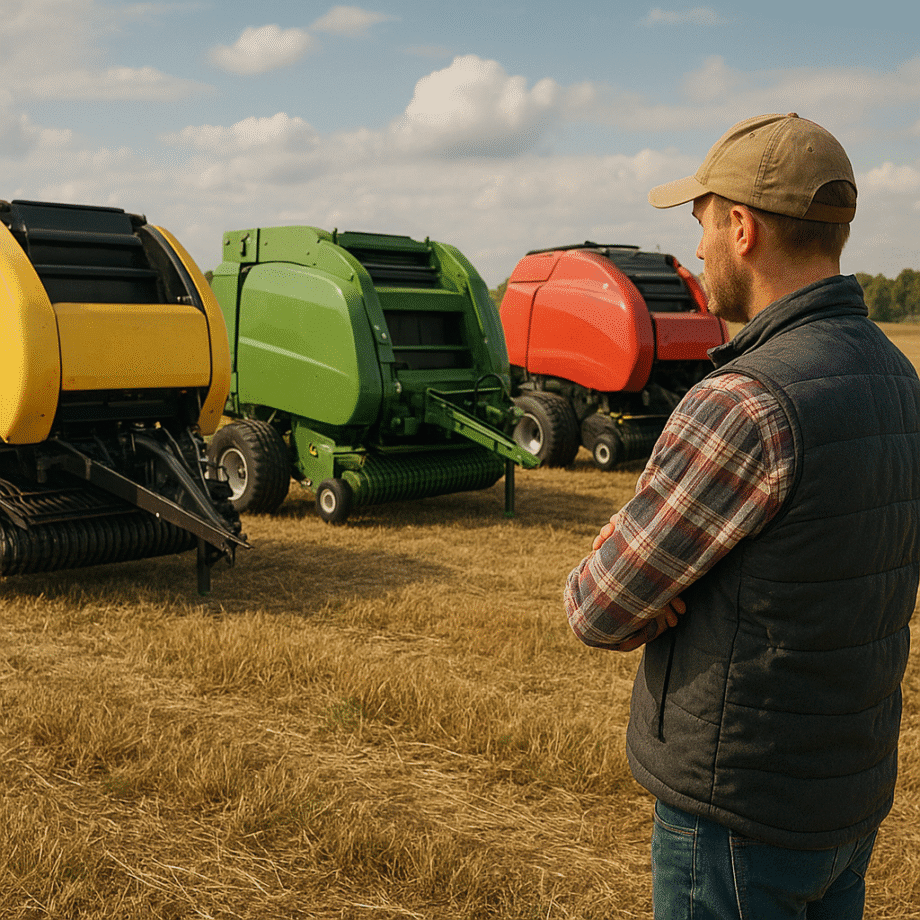
Selecting the perfect baler can transform your harvest operations, boost overall productivity, and optimize resource usage. As farm sizes vary and crop types differ, understanding baler varieties, their features, and the impact on day-to-day routine is essential. This guide delves into critical considerations when evaluating balers, explores emerging technology trends, and offers practical advice for operation and upkeep.
Understanding the Role of Balers in Modern Farming
Baling machines convert loose forage and straw into dense, easy-to-handle bales, streamlining storage and transport. Whether you run a small dairy farm or a large grain operation, a reliable baler delivers consistent bale shape and weight, reducing field time and labor costs. With various types on the market, from round balers to fixed-chamber square balers, you must grasp core mechanics to make an informed purchase.
Mechanics and Types of Balers
- Round Balers: Produce cylindrical bales using a rotating chamber system.
- Variable-Chamber Balers: Adjust bale diameter for different capacities.
- Fixed-Chamber Square Balers: Yield uniform rectangular bales ideal for stacking.
- Large Square Balers: Create high-density square bales preferred in commercial hay and straw.
Key Benefits of Using a Baler
- Efficiency: Quick collection reduces field exposure to adverse weather.
- Uniform bale density improves stacking and shipping.
- Minimized manual handling lowers labor requirements and risk of injury.
- Enhanced feed quality by preserving moisture levels and preventing spoilage.
Factors to Consider When Choosing a Baler
Every farming operation has unique constraints. Evaluate your specific demands before selecting a model. Focus on compatibility with existing tractors, expected workload, and budget. Taking time to research these points helps ensure your investment pays dividends for years to come.
Crop Type and Bale Dimensions
Different crops—hay, straw, silage—require specialized baling methods. Straw bales often demand tighter wrapping to maintain shape. Silage balers need additional net wrap or plastic film to create anaerobic conditions. Decide on bale size and weight: heavy bales maximize transport volume but necessitate powerful handling equipment. Standard bale diameters range from 1.2 m to 1.8 m, while square bales vary in length and width. Confirm that your storage facilities and handling machinery can manage chosen bale dimensions.
Power Requirements and Tractor Compatibility
Assess the power take-off (PTO) demands of each baler. Small round balers may use as little as 40 hp, whereas large square balers often require 130 hp or more. Check PTO speed: common ratings are 540 rpm or 1000 rpm. Confirm hydraulic flow and pressure compatibility, as certain features—like bale density adjustment and tailgate operation—depend on tractor hydraulics. Neglecting these specifications can lead to suboptimal performance or equipment damage.
Durability and Maintenance
Durability is crucial in high-use environments. Look for hardened steel pickup tines, reinforced bale chambers, and corrosion-resistant finishes. Easy access to service points speeds up routine checks and repairs. Investigate the availability of replacement parts for your region. A baler with a strong support network helps maintain uptime during peak harvest. Implement a scheduled maintenance plan to inspect belts, bearings, and chains, extending machine life and protecting your investment.
Technological Innovations and Operator Comfort
The latest balers incorporate advanced features to boost performance and safety. Automated functions and digital displays give operators real-time data, ensuring optimal settings for varying crop conditions. By leveraging these enhancements, farms can achieve higher throughput and greater consistency.
Net Wrapping vs Twine Wrapping
Innovation in wrapping systems has led to faster cycle times and reduced material waste. Net wrap provides tighter coverage, decreasing spoilage and improving bale integrity during transport. Conversely, twine is more affordable but may require additional cycles and manual handling. Many manufacturers offer dual-feed systems, enabling quick switching between wrapping modes. This flexibility allows farmers to adapt to different crops without changing machines.
Automation and Smart Farming Integration
Modern balers feature precision controls and GPS compatibility. Onboard computers adjust pickup height, bale density, and wrap tension automatically based on sensor feedback. Fleet management software can monitor baler location, fuel usage, and performance metrics, enabling agribusinesses to optimize routes and maintenance schedules. Wireless connectivity also permits remote diagnostics, allowing service technicians to troubleshoot issues before dispatching parts.
Best Practices for Operation and Safety
Proper use and care of a baler not only prolong its service life but also protect operators and bystanders. Establish procedures that emphasize training, inspection, and safe working zones.
Pre-Season Inspection
- Verify tightness of belts, chains, and fasteners.
- Check hydraulic hoses for leaks or cracks.
- Lubricate all moving parts according to manufacturer guidelines.
- Examine electrical connections and sensor functionality.
Operator Training and Safety
Operator proficiency is essential for safe, efficient baler use. Provide comprehensive training on machine controls, emergency shutoff procedures, and bale ejection. Use personal protective equipment—gloves, safety glasses, hearing protection—when performing maintenance or unclogging pickups. Establish exclusion zones around operating machinery and maintain clear fields to avoid obstacles.
Maximizing Longevity and Value
Long-term success with your baler hinges on consistent care and informed operation. Maintain records of service intervals, parts replacements, and performance logs to anticipate potential failures. Participate in manufacturer-sponsored workshops and forums to stay updated on best practices and new attachments or upgrades. By combining routine upkeep, strategic upgrades, and operator training, you ensure your baler continues to deliver high-quality bales season after season.