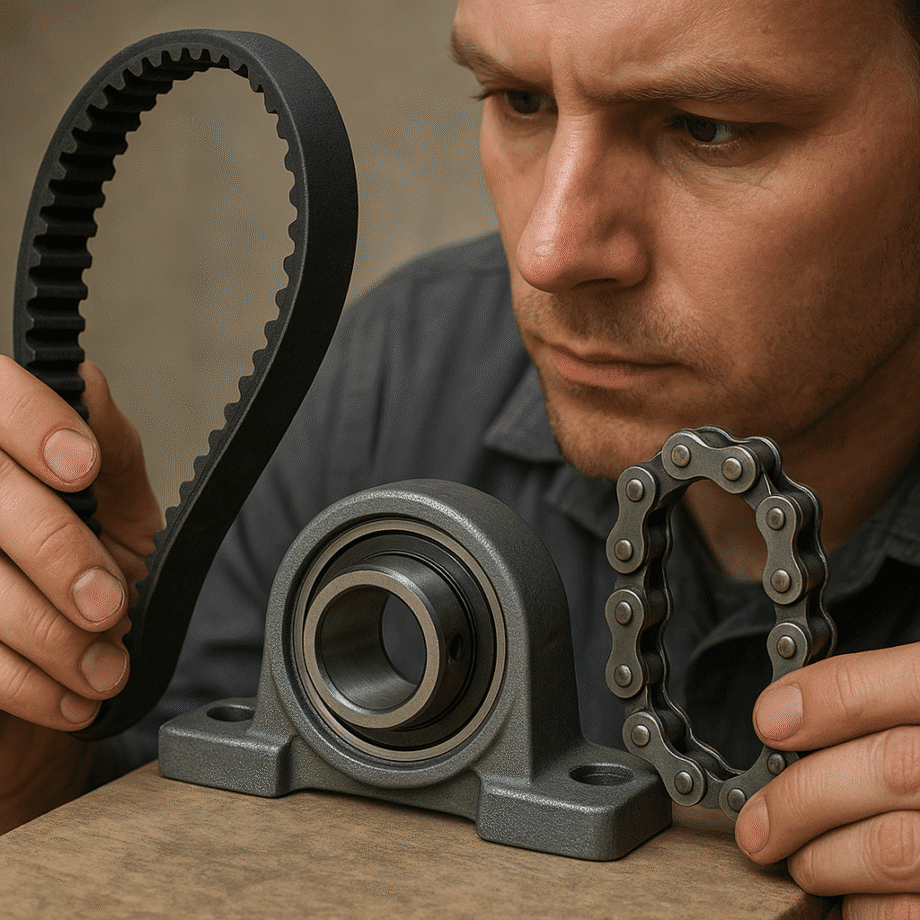
Efficient inspection and maintenance of belts, chains, and bearings are crucial for ensuring the reliability and productivity of agricultural machinery. By adopting systematic inspection routines and leveraging best practices, farm managers and technicians can minimize unexpected downtime, extend equipment life, and optimize overall operational performance. This article explores the key principles, procedures, and strategies needed to keep vital power transmission components in top working condition.
Types of Power Transmission Components
Agricultural machinery relies on a variety of belts, chains, and bearings to transfer power and support loads within tractors, combines, balers, and other equipment. Understanding the characteristics of each component type helps technicians select the proper maintenance methods and replacement intervals.
- V-belts: Common in tractors and small implements, these belts feature a trapezoidal cross-section that wedges into pulleys, providing smooth power transfer and alignment tolerance.
- Timing belts: Often used in precision applications, these toothed belts maintain synchronous motion between shafts, reducing slippage and maintaining engine valve timing on some modern agricultural engines.
- Roller chains: Widely used for heavy-duty applications such as header drives and elevator conveyors, roller chains consist of linked pins, bushings, and rollers designed to withstand high load-bearing forces.
- Drive chains: Simple link chains can power auxiliary attachments and pumping systems, favored for easy field repair and adjustable length.
- Ball bearings: Featuring rows of steel balls between inner and outer races, these bearings offer low friction and are common in high-speed shafts like fan drives and gearboxes.
- Roller bearings: Cylindrical rollers handle greater radial loads and are found in heavy-duty applications such as wheel hubs and planter drives.
- Bushing bearings: Also called sleeve bearings, they provide a cost-effective solution for low-speed shafts, relying on sliding action and lubrication.
Inspection Procedures for Belts, Chains, and Bearings
Regular inspections form the backbone of any preventive maintenance program. A structured approach ensures that defects are identified early before they escalate into costly failures.
Inspecting Belts
- Check for visible cracks, fraying, or glazing on the belt surface.
- Measure belt tension using a tension gauge; compare readings against manufacturer specifications.
- Ensure proper alignment of pulleys using a straightedge or laser alignment tool to prevent uneven wear.
- Listen for squealing noises during operation, which indicate slippage or insufficient tension.
- Inspect pulley grooves for wear patterns that match belt type; worn grooves accelerate belt damage.
Inspecting Chains
- Measure chain elongation by comparing the distance over a known number of links to the nominal pitch length.
- Check for stiff or seized links by flexing the chain at intervals along its length.
- Examine sprockets for hooked or pointed teeth; worn sprockets drastically reduce chain life.
- Verify adequate lubrication at pin and roller interfaces to minimize metal-to-metal contact.
- Inspect for side play, which can indicate internal wear in plates or rollers.
Inspecting Bearings
- Rotate shafts by hand (where possible) to feel for roughness or binding within the bearing.
- Use an acoustic stethoscope or vibration analyzer to detect abnormal bearing noise patterns.
- Check bearing temperature during operation; overheating suggests lubrication failure or excessive load.
- Look for grease leakage, contamination by dirt or moisture, and seal damage.
- Review service records to track bearing life cycles and predict replacement intervals.
Maintenance Strategies and Best Practices
Implementing structured maintenance strategies helps extend the service life of belts, chains, and bearings while reducing the likelihood of unexpected breakdowns. Key practices include proper lubrication, alignment, and scheduled replacements.
Lubrication Best Practices
- Select lubricants recommended by equipment manufacturers and apply them at specified intervals.
- Use grease guns fitted with pressure gauges to avoid over-lubrication, which can cause overheating.
- Clean old grease and contaminants from bearings before installing fresh lubricant.
- For chains, apply specialized chain oils that penetrate pins and rollers, then wipe off excess to prevent debris buildup.
- Ensure that all lubrication points are clearly labeled and accessible to maintenance personnel.
Tensioning and Alignment Techniques
- Establish standard procedures for belt tension adjustment using calibrated tension meters.
- Use laser or straightedge tools to achieve parallel pulley alignment within tight tolerances.
- For chain drives, maintain correct center-to-center distances to avoid over-tightening.
- Inspect shaft couplings and keyways for wear that can affect component alignment.
- Record alignment and tension readings after every adjustment to build a historical database.
Scheduled Replacement and Condition Monitoring
- Set up a calendar for belt and chain replacement based on operating hours, environmental conditions, and inspection findings.
- Adopt vibration monitoring for bearings in high-speed or high-stress applications to track degradation trends.
- Train operators to report abnormal sounds, temperatures, or visual issues immediately.
- Maintain an inventory of critical spare parts, including belts, sprockets, and bearing assemblies.
- Use predictive analytics tools, when available, to forecast component life and plan maintenance shutdowns.
Troubleshooting Common Issues
Despite rigorous maintenance, agricultural machinery can still encounter problems. Rapid troubleshooting and corrective action can prevent small issues from escalating into major failures.
- Belt slipping: Often caused by insufficient tension or worn pulleys. Correct tension and replace damaged pulleys.
- Chain skipping: Usually the result of stretch or sprocket wear. Measure elongation, replace chain or sprockets as needed.
- Bearing overheating: Caused by lubrication failure, overloading, or misalignment. Re-lubricate properly, check load specifications, and realign shafts.
- Excessive vibration: Can originate from imbalance in rotating parts, loose fasteners, or damaged bearings. Perform dynamic balancing and tighten hardware.
- Contamination: Dirt, moisture, or chemicals entering components lead to accelerated wear. Improve sealing, install better guards, and enhance filtration.
By following these efficient inspection routines and maintenance guidelines, farm personnel can significantly enhance the operational lifespan of belts, chains, and bearings, ensuring uninterrupted productivity during critical planting and harvesting seasons. Prioritizing maintenance, leveraging proper lubrication, and embracing condition monitoring pave the way to cost savings and more reliable agricultural machinery performance.