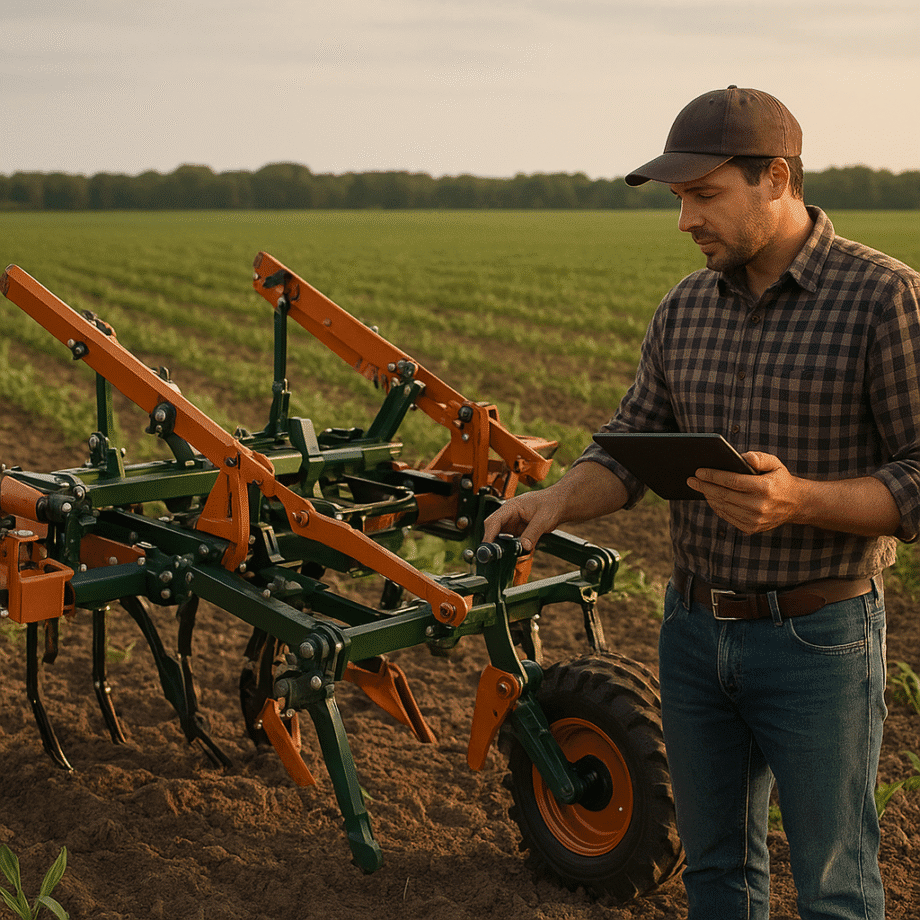
The advent of foldable and portable farming machines marks a significant shift in the agricultural landscape. By combining innovation with practical design, these tools empower farmers to tackle diverse terrains and optimize resource allocation. As global demands on food production intensify, the integration of compact and transportable machinery addresses key operational challenges. This article examines how these creations unlock new levels of efficiency, bolster sustainability, and support the evolving needs of both small-scale and large-scale producers.
Enhancing Flexibility in Modern Farming Operations
Farmers have long relied on specialized implements that remain stationary or require extensive equipment to transport. Foldable and portable solutions transform this paradigm, offering a portable footprint without sacrificing power. Whether tilling remote fields, tending orchards on steep slopes, or performing precision tasks in greenhouses, these machines adapt to varying conditions with ease.
Key attributes include rapid assembly and disassembly, enabling operators to move swiftly between plots. Collapsible frames and wheeled modules can be loaded onto compact trailers or standard utility vehicles. On-site, quick-release pins and modular attachments allow workers to configure equipment in minutes. This level of mobility streamlines planting and harvesting schedules, reduces downtime, and minimizes labor-intensive rigging.
- Lightweight chassis constructed from high-strength alloys
- Interchangeable implements for plowing, seeding, pruning, and spraying
- Adjustable track widths and stabilizing legs for uneven terrain
- Integrated hydraulic or electric power take-off for multi-purpose use
These features enhance a machine’s capacity to serve as a multi-tool rather than a single-function implement. The result is improved resource utilization and a smaller environmental footprint compared to maintaining a fleet of dedicated devices.
Technological Drivers of Portability
The evolution of foldable agricultural equipment owes much to advancements in structural technology and materials science. Modern designers leverage finite element analysis to create lightweight yet robust frames. Components made from carbon-reinforced polymers or high-yield steel alloys enable load-bearing capabilities previously reserved for much heavier machines.
Smart hydraulics and electrified actuators contribute to smooth deployment at the push of a button or flip of a switch. Cabin-integrated controls or remote operators can extend arms, adjust booms, and rotate implements with precision. Coupled with GPS-guided steering and implement-level sensors, these systems optimize field patterning and reduce overlap or missed areas.
- Foldable booms with telescoping segments for compact storage
- Plug-and-play electronic modules for easy diagnostics and firmware updates
- Sensor networks that track soil moisture, crop health, and obstacle detection
- Bluetooth or IoT connectivity for real-time monitoring and fleet management
Innovations such as quick-connect couplers and universal mounting plates have accelerated the adoption of these machines. Farmers benefit from lower training requirements and the ability to switch between tasks without specialized tools. As a side effect, fewer service calls and simplified repairs translate into reduced maintenance overhead.
Economic and Environmental Advantages
Beyond operational convenience, foldable and portable machinery delivers tangible economic gains. Lower transportation costs stem from reduced need for heavy haulers or specialized trailers. Fuel consumption drops when lightweight units replace bulky alternatives, directly impacting on-farm budgets.
Moreover, streamlined designs often mean lower purchase prices. By combining multiple functions into a single chassis, manufacturers can offer attractive price points to growers seeking versatility. This cost-effectiveness encourages smallholders and emerging farmers to invest in mechanization, thus democratizing access to modern agricultural practices.
On the environmental front, smaller machinery leaves fewer tracks and causes less soil compaction. Precision-enabled foldable machines apply fertilizers and pesticides with surgical accuracy, cutting chemical use by up to 30 percent in some studies. Reduced inputs foster healthier ecosystems and support long-term soil fertility.
- Decreased greenhouse gas emissions from transport and operation
- Lower risk of soil erosion thanks to minimal ground disturbance
- Better integration with regenerative practices such as cover cropping
- Enhanced resource conservation through targeted irrigation and spraying
Implementing these devices aligns with broader goals of circular agriculture and carbon footprint reduction. The cumulative impact across thousands of hectares can shift entire regions toward more resilient production models.
Field Applications and Future Outlook
Case studies from vineyards in Europe to rice paddies in Asia illustrate the growing adoption of foldable machinery. In terraced landscapes where conventional tractors struggle, compact cultivators equipped with folding tracks glide along narrow benches. In large-scale grain operations, seed drills that collapse to fit within shipping containers travel overseas, enabling international leasing or cooperative sharing arrangements.
Startups and established OEMs alike are exploring battery-electric propulsion for portable tractors. With modular battery packs that slide into foldable frames, fleets can run emission-free during critical periods. Solar-assisted charging systems mounted on trailers further extend runtime in off-grid settings.
Looking ahead, integration with autonomous navigation and AI-driven decision support promises to elevate these machines from tools to intelligent partners. Predictive maintenance algorithms will forecast critical wear points, while real-time agronomic models suggest optimal timings for soil conditioning and harvest.
- Robotic foldable sprayers that learn field layouts and avoid sensitive zones
- Swarm coordination between multiple portable units for synchronized operations
- Augmented reality interfaces to guide technicians through quick assembly steps
- Blockchain-secured logs of machine usage for transparent leasing and resale markets
As research continues into novel actuation methods such as shape-memory alloys and inflatable structures, the boundary between portability and performance will blur even further. Agriculture stands on the cusp of a transformation where power and convenience converge in foldable, intelligent machines tailored for dynamic environments.