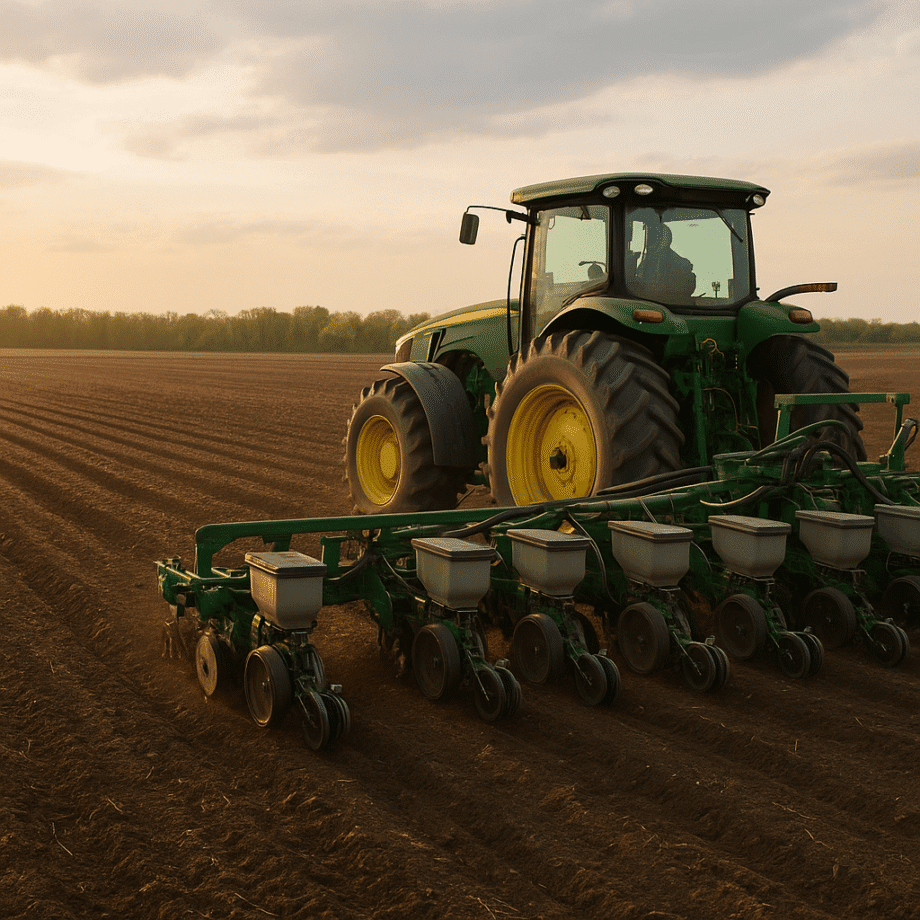
Precision planters represent a pivotal advancement in modern agriculture, enabling farmers to optimize seed placement and maximize crop efficiency. By integrating sensor technology, GPS guidance, and data-driven decision-making, these machines ensure that each seed receives the precise amount of soil contact, depth, and spacing required to thrive. Understanding the inner workings, field benefits, and future pathways of precision planters is essential for stakeholders aiming to enhance sustainability and yield potential across diverse farming systems.
Mechanisms and Components of Precision Planters
At the heart of every precision planter lies a suite of mechanical and electronic systems designed to deliver unmatched accuracy in seed placement. Unlike conventional planters, which rely on uniform spacing and manual adjustments, precision units leverage advanced actuators and metering devices to modulate delivery in real time. This synergy between hardware and software reduces seed waste, minimizes overlap, and promotes uniform crop stands.
Seed Metering and Delivery Systems
Modern planters employ either vacuum-driven or finger-wheel metering systems to control the flow of individual seeds. The variable-rate capability allows operators to adjust seeding rates on-the-go, ensuring that each variety or field zone receives an optimal population. Coupled with real-time feedback loops, these mechanisms can detect double drops, skips, or blockages and automatically correct errors without halting operations. Such automated responses translate into consistent emergence and more predictable growth stages.
GPS and Guidance Technologies
Global Positioning System (GPS) integration forms the backbone of precision planting. High-accuracy receivers track machine position within centimeters, guiding row units to follow predefined paths. Assisted by auto-steer systems, planters can maintain straight lines even across challenging terrain, reducing compaction and overlap. In-field mapping records exact seed locations, enabling post-season analysis of population uniformity and facilitating iterative improvements for subsequent planting seasons.
- Row-unit controllers for individual depth and pressure adjustments
- Section control to shut off adjacent rows upon detecting overlaps
- On-the-go monitors for seed singulation, spacing, and population checks
- Hydraulic or electric drives replacing mechanical linkages for rapid response
Impact of Precision Planting on Resource Management
Efficient resource utilization lies at the core of sustainable agriculture. Precision planters contribute to this goal by optimizing inputs such as fertilizer, water, and seed treatments. By placing each seed at an exact depth and spacing, the system ensures that root development and canopy closure occur uniformly, reducing competition for nutrients and moisture.
Reduction of Seed and Input Waste
Traditional over- or under-seeding can lead to significant economic losses. Precision systems limit seed waste by ensuring that every seed has a high probability of germination in favorable conditions. Additionally, when combined with variable-rate fertilizer applicators, planters can deposit nutrients directly in the seed furrow or adjacent bands, maximizing uptake and minimizing leaching. This targeted approach supports environmental goals by curbing runoff and greenhouse gas emissions.
Enhanced Water-Use Efficiency
Integrating moisture sensors and soil probes with planter operations allows real-time adjustments to planting depth based on current soil conditions. In drier zones, the planter may place seeds at shallower depths to improve germination rates, whereas in wetter areas, deeper placement can protect seeds from pathogens or waterlogging. Such responsive strategies lead to more robust stands and improved drought resilience, directly translating to increased economic returns.
- Precise seed-to-soil contact for rapid emergence
- Optimized spatial distribution reducing intra-row competition
- Localized nutrient placement increasing uptake efficiency
- Alignment with conservation tillage and cover-crop practices
Innovations and Integration with Digital Agriculture
As the agri-tech landscape evolves, precision planters are becoming nodes within larger, interconnected farm management platforms. Through wireless connectivity, planters transmit performance data to cloud-based dashboards, enabling agronomists and managers to make informed decisions. This ecosystem approach fosters continuous improvement and rapid troubleshooting.
Machine Learning and Predictive Modeling
Advanced algorithms analyze historical planting data alongside soil maps, weather forecasts, and yield trends to generate optimized planting prescriptions. These prescriptions guide the planter’s variable-rate functions, creating zone-specific seeding plans that reflect micro-variations within the field. Over time, machine learning models refine their predictions, increasing planting efficiency and reducing the need for manual calibration.
Autonomy and Robotics
Fully autonomous planting vehicles are no longer science fiction. Robotic planters, equipped with LiDAR and computer vision systems, can operate beyond GPS-reliant guidance, navigating obstacles and adjusting in real time. Such platforms work in concert with drones and autonomous tractors, forming a cohesive fleet that tackles planting, monitoring, and targeted intervention without human operators present in the cab.
- Edge computing units processing sensor inputs instantaneously
- Inter-vehicle communication protocols for coordinated tasks
- Digital twin simulations enabling pre-season trials
- Integration with farm management information systems (FMIS)
Challenges and Future Trends in Precision Planting
Despite the transformative capabilities of precision planters, adoption hurdles remain. High capital costs, complex setup requirements, and the need for skilled technicians can deter some operators. Additionally, data management poses challenges: vast datasets demand reliable storage, cybersecurity measures, and standardization to ensure compatibility between different equipment brands.
Addressing Technical and Economic Barriers
Leasing and custom hire services are emerging to lower entry costs, enabling smallholders to benefit from automation without full ownership. Training programs, delivered both on-site and online, improve operator proficiency, while manufacturer partnerships with agronomists streamline service and maintenance. Subsidies and government incentives further promote precision agriculture initiatives, recognizing the long-term benefits of resource conservation and food security.
Emerging Materials and Design Innovations
Future planter designs emphasize reduced weight and increased modularity. Composite materials and 3D-printed components cut down on wear and tear, while quick-change row units cater to multiple crop types within the same planting window. Research into self-adjusting mechanics aims to eliminate manual calibration altogether, using embedded actuators that sense and respond to soil resistance and topography on the fly.
As global pressures on land and water resources intensify, the role of precision planters in boosting productivity and mitigating environmental impact will only grow more crucial. Continued collaboration between engineers, data scientists, and farmers will shape the next generation of planting equipment, driving agriculture toward greater resilience and profitability.